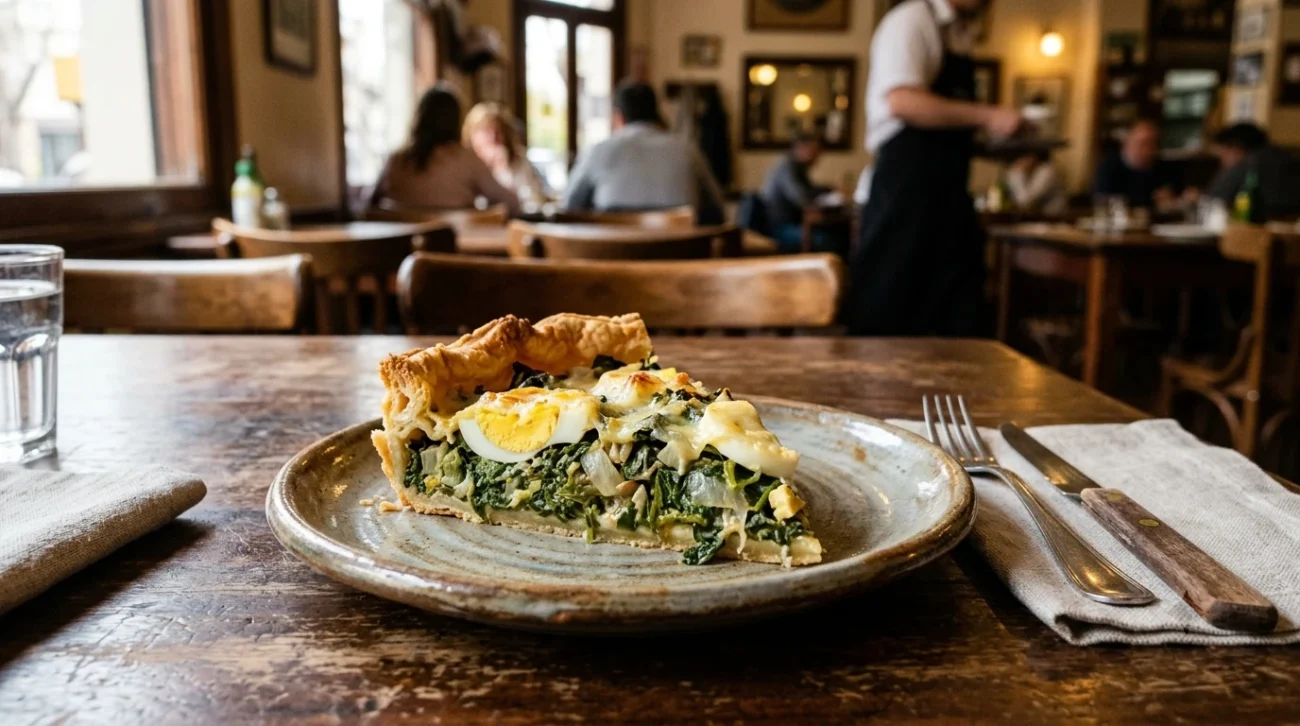
Searching for the best tarta de acelga near you sounds simple, but the dish often hides behind several names, incomplete menus, and daily availability. The most effective approach is to search for tarta de acelga, pascualina, tarta pascualina, torta pasqualina, and Swiss chard pie, then confirm directly that the filling is made with chard and is available that day.
A strong tarta de acelga should have a savory, well-drained filling, pastry that is fully baked underneath, and enough egg or cheese to bind the greens without overpowering them. The closest result on a map is not always the best choice. Recent dish-specific photos, current menu information, and a quick phone call usually tell you more than a restaurant’s overall rating.
The search can be harder in places where Argentine or Uruguayan food is uncommon. In those cities, the best option may come from a Latin American bakery, an Italian food shop, a home-based cook, or a caterer willing to prepare a whole pie to order.
What Tarta de Acelga Is
Tarta de acelga is a savory Swiss chard tart associated strongly with everyday cooking in Argentina and Uruguay. Recipes vary, but the filling commonly combines cooked chard with onion, egg, cheese, pepper, and nutmeg. The mixture is baked in pastry and served warm, at room temperature, or cold.
Some versions have pastry only on the bottom, while others are completely enclosed. The dough may be homemade from flour, water, oil, and salt, or made with commercial pastry rounds. Richer recipes can include béchamel, ricotta, fresh cheese, or grated hard cheese.
The dish is valued partly because it turns a large quantity of leafy greens into a filling meal that can be prepared ahead. It works as lunch, dinner, picnic food, or a bakery snack sold by the slice. A whole tart also travels well and can feed several people without requiring last-minute preparation.
The name translates directly as “chard tart,” but English-language menus may use “chard pie,” “greens pie,” or “spinach and ricotta pie.” Those translations can be useful for customers, but they can also create confusion because spinach and chard are not the same vegetable.
Chard has broad leaves and thicker stems, with a firmer texture and a stronger mineral taste than spinach. A cook may use both vegetables together, especially when chard is difficult to source. That can still produce a good tart, but the menu should describe the filling accurately.
The Difference Between Tarta de Acelga and Pascualina
Tarta de acelga and pascualina belong to the same family of savory greens pies, but the names do not always mean exactly the same thing. Tarta de acelga is the broader description. Any tart built around chard may reasonably carry that name, whether it is open-faced, covered, rich with cheese, or made with only a small amount of egg.
Pascualina usually refers to a more specific Italian-Argentine and Italian-Uruguayan tradition. It is linked to the Ligurian torta pasqualina, an Easter pie associated with Genoa. Italian immigrants carried versions of the dish to the Río de la Plata, where it became part of ordinary home cooking rather than remaining only a holiday food.
A typical pascualina is enclosed in pastry and may contain whole eggs baked inside the greens. When sliced, the egg appears as a distinct section of white and yolk surrounded by chard. Ricotta is common in many current versions, although recipes differ and some cooks consider it an optional addition rather than a defining ingredient.
Menu language is not consistent. One bakery may call any covered chard tart pascualina, while another may reserve that name for a version with whole eggs. A third shop may sell the same general dish as tarta de verdura, meaning vegetable tart.
The practical lesson is to ask what is inside rather than relying only on the title. If whole eggs, ricotta, a top crust, or a high proportion of chard matter to you, confirm those details before ordering.
How to Find the Best Tarta de Acelga Near You
A direct search for “best tarta de acelga near me” is a useful starting point, but it often misses small businesses and translated menu listings. Search engines rank local results using several factors, including relevance, distance, and how established a business appears. A highly visible restaurant may rank above a smaller cook who makes the better tart.
Run separate searches using the main alternate names. Try “pascualina near me,” “Swiss chard pie near me,” “Argentine bakery,” “Uruguayan food,” and “Latin American savory pies.” Adding your neighborhood or city can produce better results than relying on automatic location detection.
Italian bakeries and prepared-food shops are also worth checking. Although the Argentine version has its own character, a shop serving Ligurian or northern Italian food may sell torta pasqualina or a related greens pie. Empanada businesses sometimes make full-size savory tarts even when those items do not appear prominently on the main menu.
Delivery apps can help, but their results depend on the exact address entered. A vendor may deliver to one district but not another, and a daily tart may disappear from the app once the available batch sells out. Search inside each app for both Spanish and English names.
Social media is often more current than a business website. Bakeries and home cooks commonly announce limited savory items through recent posts or stories rather than updating a permanent menu. Look for dates, pickup locations, customer comments, and photos showing the inside of the pie.
A photograph of an uncut tart reveals very little about quality. A clear cross-section is more useful because it shows the thickness of the filling, the condition of the base, the amount of cheese, and whether whole eggs are included. Recent customer photos usually offer stronger evidence than highly edited promotional images.
Before traveling or placing a large order, contact the seller. Ask whether the tart is available today, whether it contains chard rather than spinach, and whether it is sold whole or by the slice. Also ask when it was baked and how it should be reheated.
What Makes a Good Tarta de Acelga
The filling should taste clearly of chard. Onion, garlic, cheese, pepper, nutmeg, and herbs can support the vegetable, but they should not bury it. A tart that tastes mainly of cream or melted cheese may be enjoyable, yet it misses the character that makes tarta de acelga distinct.
Moisture control is one of the clearest signs of careful preparation. Chard releases a large amount of water as it cooks. If the greens are not drained thoroughly, liquid collects in the filling and softens the bottom pastry.
A good slice should hold together when cut without feeling dry or rubbery. The filling may be tender, but it should not spill water onto the plate. A slightly soft base can occur after refrigeration or delivery, though a gummy, pale layer usually points to too much moisture or insufficient baking.
The chard stems require attention as well. They can add texture and reduce waste, but they take longer to soften than the leaves. Thick, fibrous pieces suggest hurried preparation, while finely chopped, properly cooked stems can blend smoothly into the filling.
The crust should match the style of the tart. An oil-based dough may be firm and relatively plain, serving mainly as a shell for the heavy vegetable mixture. Butter pastry or puff pastry will be richer and flakier, but it still needs enough structure to support the filling.
The underside matters more than a deeply browned top. A beautiful surface cannot compensate for raw or wet pastry underneath. In a well-made tart, the base should be cooked through and strong enough to lift with a fork.
Eggs often provide the main binding. Beaten egg helps the chopped greens set into a clean slice, while whole eggs inside pascualina create a richer and more traditional presentation. The egg should be cooked safely without becoming tough from excessive baking or repeated reheating.
Cheese should add salt, body, and richness without taking control of the dish. Ricotta creates a softer filling, while grated hard cheese adds a sharper flavor. Fresh or semi-firm cheeses can make the center richer, though too much may lead to excess moisture or heaviness.
Seasoning is easy to underestimate because chard has a strong but sometimes flat taste after cooking. Nutmeg is common, and black pepper can sharpen the filling. Salt must be judged carefully when several cheeses are used.
Price, Ordering, and Availability
There is no standard price for tarta de acelga because the format varies widely. A single bakery slice, an individual tart, a restaurant portion, and a family-size pie cannot be compared fairly without knowing their weight and size. Ingredient costs, labor, packaging, and delivery also differ by city.
Ask for the diameter or approximate number of servings when ordering a whole tart. A densely filled pie may feed more people than a larger but shallow one. For a meal with side dishes, a standard wedge may be enough, while a tart serving as the main course will need to be divided more generously.
Home cooks may require advance notice because they prepare the filling and pastry in small batches. Some request a deposit for custom orders, especially for large pies or deliveries outside their regular area. Confirm the final price, pickup time, and whether delivery charges are included.
Availability can change by the hour. A bakery may prepare only a few tarts in the morning and sell the final slices before lunch. Reserving a portion is sensible when the business confirms that production is limited.
Ask whether the tart will arrive hot, chilled, or frozen. A hot tart can suffer in a sealed container because trapped steam softens the pastry. A chilled or frozen tart may travel better, but it requires clear reheating instructions.
For the best texture, many covered tarts respond well to dry oven heat rather than a microwave. Microwaving warms the center quickly but can leave the pastry soft. The seller’s instructions should take priority because dough thickness and filling density vary.
Dietary Needs and Food Safety
Tarta de acelga is often vegetarian, but it is not automatically vegan. Standard recipes usually contain eggs, cheese, and wheat pastry. Some crusts also contain butter, milk, or animal fat.
People with allergies should request a full ingredient check. Shared work surfaces, flour dust, cutting tools, and baking pans can create cross-contact even when the filling itself does not contain the allergen in question. A “vegetable tart” label is not enough to confirm that a product is dairy-free, egg-free, or gluten-free.
A gluten-free version requires a separate pastry and careful kitchen handling. A vegan version needs a replacement for both the egg binder and the cheese. These versions can be successful, but they should be ordered from a cook who understands the requested restriction rather than improvised after the tart is made.
The dish contains leafy greens, yet its overall nutritional content depends on the pastry, cheese, eggs, oil, and portion size. A thick bakery slice can be much richer than a home recipe with thin dough and a high proportion of chard. Without the recipe and serving weight, exact calorie claims are unreliable.
Because the tart commonly contains cooked vegetables, egg, and dairy, it should be treated as perishable. Refrigerate takeaway portions promptly rather than leaving them on a counter for several hours. General food-safety guidance for cooked leftovers supports using refrigerated portions within a few days.
Reheat only the amount you plan to eat. Repeated warming and cooling can reduce quality and create avoidable food-safety concerns. Discard the tart if it develops an unusual sour smell, visible spoilage, or a texture that suggests poor storage.
Common Misunderstandings
One common mistake is assuming that the nearest result is the best result. Local search placement reflects more than food quality, and many ratings cover the entire business rather than one specific dish. A slightly farther seller with current tart photos and clear preparation details may be the safer choice.
Another misunderstanding is that pascualina must follow one fixed recipe. The dish has a clear historical connection to Liguria and the Río de la Plata, but home and commercial versions have changed over time. Chard, spinach, ricotta, whole eggs, different cheeses, and several pastry styles all appear in current cooking.
Spinach pie is also frequently treated as an exact substitute. It is close enough to satisfy some customers, but its flavor and texture differ from a true chard tart. Sellers should state whether they use chard, spinach, or a mixture.
Some people assume a dark green filling proves freshness. Cooked chard naturally changes color, and appearance alone does not establish when the tart was made. The pastry’s texture, aroma, storage, and confirmed baking time are better indicators.
A final mistake is judging the tart only while it is hot. Many versions set more cleanly after resting and are traditionally eaten at room temperature or chilled. The best serving temperature depends on the pastry and filling, not on a rule that every savory pie must arrive steaming.
Frequently Asked Questions
What should I search besides “tarta de acelga near me”?
Search for pascualina, tarta pascualina, torta pasqualina, Swiss chard pie, Argentine vegetable tart, and chard-and-ricotta pie. Also check Argentine restaurants, Uruguayan food businesses, Italian bakeries, empanada shops, caterers, and home cooks.
Is tarta de acelga the same as pascualina?
They overlap, but the terms are not always identical. Tarta de acelga broadly means a chard tart, while pascualina often refers to a covered greens pie with whole eggs and an Italian-Argentine or Italian-Uruguayan background.
How can I tell whether the tart is made with chard?
Ask the seller directly because translated menus may use “spinach pie” or “greens pie.” Chard generally has a firmer texture and more substantial stems than spinach, but a photo alone may not provide a reliable answer.
Is a soggy bottom always a sign of a bad tart?
A slightly soft base can result from refrigeration, delivery, or reheating. A wet, gummy, undercooked layer is different and usually means the greens were not drained well or the pastry did not bake fully.
Can I order tarta de acelga for a party?
Many bakeries, caterers, and home cooks can prepare a whole tart with advance notice. Confirm the size, serving estimate, ingredients, pickup or delivery time, and whether it will arrive hot, chilled, or frozen.
Is tarta de acelga healthy?
It provides leafy greens and often includes eggs and cheese, but the final nutrition depends heavily on the crust, fat, filling ratio, and portion size. Treat it as a complete savory pie rather than assuming it is light simply because it contains vegetables.
How long can leftover tarta de acelga be kept?
Refrigerate it promptly and follow standard guidance for cooked leftovers, which generally means eating it within three to four days. Store it in a sealed container and discard it earlier if the smell, appearance, or texture seems wrong.
Conclusion
Finding the best tarta de acelga near you requires more than opening the first map result. The strongest search combines alternate dish names, recent photos, current menus, and direct confirmation from the seller.
Quality becomes easier to judge once you know what matters. Look for clear chard flavor, controlled moisture, cooked pastry, balanced cheese, and a filling that holds together without becoming dry.
Where the dish is uncommon, a custom order may be more successful than waiting for it to appear on a restaurant menu. A skilled home cook or savory-pie baker can often prepare the exact style you want when given a clear description.
The name on the menu matters less than what arrives on the plate. A fresh, carefully drained, properly baked greens pie is the result to seek, whether the seller calls it tarta de acelga, pascualina, or Swiss chard pie.
