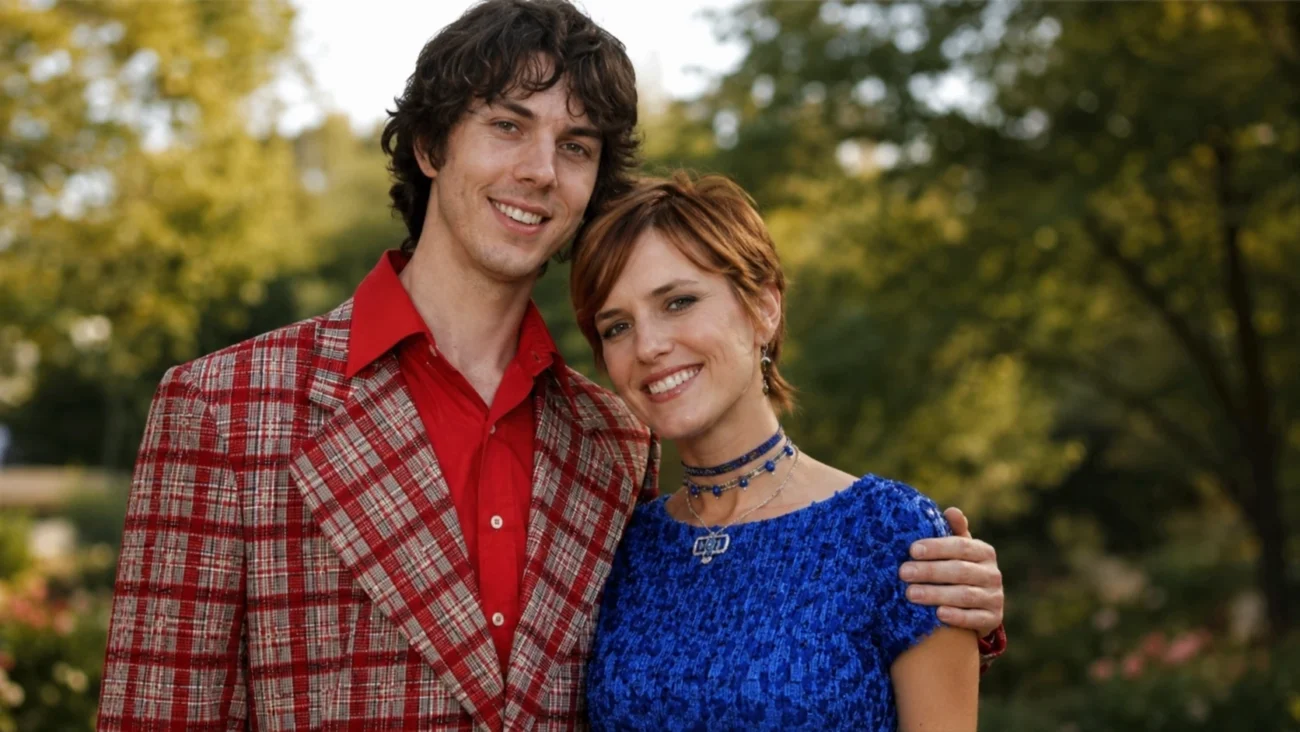
Heidi Van Pelt entered public memory through a story that was easy to sensationalize and hard to explain fairly. In 2001, she became linked to Taran Noah Smith, the youngest son from Home Improvement, at a moment when he was trying to leave childhood fame behind and she was building a life around vegan food, raw cooking, and alternative nutrition. The marriage drew tabloid attention because of their 16-year age gap, but the fuller record is stranger, more human, and more revealing than the shorthand version. Van Pelt’s life is also a story about ambition, reinvention, money, food culture, and the cost of having one chapter define the whole person.
Early Life and Family Background
Heidi Van Pelt was raised in Missouri, with the Kansas City area serving as the clearest public anchor of her early life. The most detailed reporting on her background comes from The Pitch, which described her as a restless, creative Midwesterner whose interests moved across food, language, fashion, film, music, and alternative health. Public accounts name her mother as Marsha Duncan, who later became involved in Van Pelt’s vegan food business before their relationship broke down in a bitter dispute. Beyond those details, much of Van Pelt’s family life remains private, and a responsible biography should not fill the gaps with guesses.
Van Pelt graduated from high school in 1986, according to reporting by The Pitch, after attending schools including Oak Park and Blue Springs. She later studied fashion design at Stephens College in Columbia, Missouri, and took coursework in German and philosophy at the University of Missouri. Her education then carried her farther west, where she pursued Russian studies at the University of Washington in Seattle. She did not follow a conventional academic path to a single credential, but the movement itself says something about her: she was searching for a language, a discipline, and a life that fit.
That search continued into adulthood. Van Pelt’s interests were never easy to place in one box, and that became both a strength and a liability. She could imagine a food company, a film project, a radio program, a wellness practice, and a restaurant with the same restless energy. But here’s the thing: the same quality that made her inventive also made her public story hard to stabilize.
Education, Early Ambitions, and the Move West
Before she became known as a vegan chef or as Smith’s wife, Van Pelt moved through creative and intellectual circles on the West Coast. She spent time in Seattle, where she encountered animal-rights activists and became more deeply involved in vegan ideas. The Pitch reported that she had been vegetarian for several years before meeting people who avoided dairy, eggs, and honey as well. To a Midwesterner encountering that world in the early 1990s, the discipline of veganism seemed extreme at first, but she eventually joined it.
Van Pelt later went to Los Angeles, where she worked around film and media. Public reporting has connected her with a small company called Emergent Films and with production work before food became the center of her career. That period matters because it helps explain how she moved into Hollywood-adjacent spaces long before the tabloid attention began. She was not a studio celebrity, but she was close enough to Los Angeles creative culture to host, cater, collaborate, and circulate.
By 1994, Van Pelt was working as a nutritional counselor in Watts, according to The Pitch. The work was practical rather than glamorous: she taught homeless people and low-income families how to prepare food on tight budgets, including how to make use of produce from food pantries. She also co-hosted a Pacifica radio program called Raw Health, which placed her inside a small but active world of raw-food believers and plant-based eaters. That was years before vegan food became a supermarket category with venture-backed brands and polished packaging.
Building a Career in Vegan Food
Van Pelt’s early culinary work developed in a very different food culture from the one modern readers know. Vegan cheese was limited, raw-food restaurants were rare, and non-dairy cooking still carried the reputation of being austere or fringe. Van Pelt worked in that space before it was fashionable, experimenting with cashews, raw preparations, and comfort-food substitutes. Her cashew-based cheese recipe would later become the product most closely associated with her name.
Her client list and social circle eventually expanded. The Pitch reported that actor Woody Harrelson was among her catering and nutritional counseling clients, which fits the Los Angeles raw-food world of the period. She hosted dinner parties and food gatherings where actors, artists, musicians, and activists crossed paths. In that setting, Van Pelt was not simply cooking meals; she was selling a way of living that linked food to ethics, health, animals, and a certain kind of creative freedom.
Not many people know this, but Van Pelt’s most interesting professional contribution may have arrived too early for its own good. Cashew-based cheese later became common in plant-based cooking, appearing in restaurants, packaged foods, and home recipes across the United States. Van Pelt was working with that idea when the market was still small, fragmented, and skeptical. Her career shows how often early food trends begin in messy kitchens and informal dinner circles before major companies turn them into polished products.
Meeting Taran Noah Smith
Van Pelt met Taran Noah Smith through the kind of raw-food social gathering that had become part of her Los Angeles life. Smith, born April 8, 1984, was famous for playing Mark Taylor on Home Improvement, the ABC sitcom that ran from 1991 to 1999 and made him a familiar face before he reached adulthood. He had started the show as a child and left acting after it ended, later saying in interviews that he had never had the chance to decide what he wanted from his life. That background shaped the relationship as much as the age difference did.
According to The Pitch, Smith first appeared at one of Van Pelt’s raw-food dinner parties in 1998, when he was 14. She did not pay much attention to him then, and the relationship did not begin at that point. The two crossed paths again in 2000 at a movie premiere and connected over music, including Radiohead. Smith invited her to his Sherman Oaks home to play music in his recording studio, and their friendship moved quickly into something more complicated.
The relationship was controversial from the beginning because Smith was still a teenager and Van Pelt was 16 years older. Van Pelt was in her early 30s, while Smith was trying to separate himself from his parents, his childhood career, and the financial structure around his acting earnings. Smith still lived with his parents when the relationship started, and he reportedly told them Van Pelt was younger than she was. The truth eventually came out, and the family conflict escalated.
Marriage, Money, and Public Scrutiny
In April 2001, Van Pelt and Smith held a ceremony in Topeka, Kansas. Smith was 17 at the time, and Van Pelt was 16 years his senior, which made the marriage a tabloid subject almost immediately. The ceremony itself was unusual, arranged with help from attorney David Scott Whinery, an old Kansas City connection of Van Pelt’s. The Pitch reported that they exchanged mood rings while barefoot, and that media outlets later pursued the wedding video.
Legally, the marriage was not simple. A California judge rejected the marriage because California did not recognize common-law marriage and Kansas law required both parties to be 18 or have parental consent. Smith had hoped marriage would help him gain adult legal standing and access to his trust. The plan did not work as intended, and the couple settled in Lawrence, Kansas, while waiting for Smith to turn 18.
The money around Smith’s acting career became a major part of the story. The Pitch reported that Smith had earned about $1.5 million during his eight years on Home Improvement, with annual syndication residuals also in the picture. Smith later fought with his parents over access to his trust, a conflict often folded into accounts of his relationship with Van Pelt. Any fair account has to separate the issues: the marriage was controversial on its own, but it also unfolded inside a larger fight over childhood fame, parental control, and money.
Playfood and the Cashew Cheese Years
After Smith turned 18 in 2002, he and Van Pelt moved back to Los Angeles and formed Playfood. The company was built around vegan and organic food, with Van Pelt’s cashew cheese at its center. Smith served as chairman and CEO, while Van Pelt was president. They promoted the company with a bright orange van, catering appearances, art events, and informal restaurant nights at the Sherman Oaks house Smith owned.
The Playfood gatherings became part restaurant, part party, part performance space. Smith built furniture from recycled materials, artists hung work on the walls, and the couple served food to large crowds without the structure of a conventional licensed restaurant. The Pitch reported that the unofficial Playfood café could seat 80 people and that Van Pelt and Smith sometimes served more than 200 in a few hours. Daryl Hannah was described as a regular, and the company landed catering work connected to the Red Hot Chili Peppers and filmmaker Mike Judge.
For a while, the business had real energy. The food was early for its market, and the concept fit a growing interest in ethical eating, raw cuisine, and alternative comfort food. But the household, business, and marriage blurred in ways that were difficult to sustain. Van Pelt later described feeling stuck doing the work while Smith enjoyed the party culture around the business, and Smith said the business buzz kept the relationship alive longer than the affection did.
The Move Back to Missouri
By 2005, Van Pelt and Smith were looking at a more commercial future for Playfood. They wanted to produce larger volumes of vegan cheese and had plans for a restaurant space in Studio City. Because the Los Angeles space was not suited for manufacturing at scale, Kansas City became part of the plan. Van Pelt’s mother found a production space in the commercial caves under Park University, and Smith funded improvements to the plant.
The Missouri operation was meant to turn Playfood from a scene into a real packaged-food company. Industrial blenders, grocery accounts, staff, and production schedules replaced the looser rhythm of house dinners and art parties. By late 2006, Playfood products were stocked in more than 50 Price Chopper, Balls, and Hen House stores around Kansas City, according to The Pitch. Whole Foods and other national chains had shown interest if the production plant could obtain organic certification.
That period may have been the closest Van Pelt came to seeing her food ideas become a larger commercial success. She described feeling grounded by the Missouri operation and proud that bottles were finally reaching stores. The company’s orange “Nacheezmo” spread had a real shot at wider distribution. Yet beneath the optimism, the structure of the company was fragile, the finances were strained, and Van Pelt’s relationships with Smith, her mother, and other workers were deteriorating.
Divorce, Lawsuits, and the Collapse of Playfood
By early 2007, the personal and business disputes had merged. Van Pelt believed her mother and bookkeeper were mishandling the company and trying to take control, while Smith believed Van Pelt had created a separate company that shut him out of the Missouri operation. Smith sued after discovering Playfood Manufacturing LLC had been incorporated without him as a signer. The dispute quickly moved from family argument to courtroom fight.
At a January 2007 hearing in Platte County, Smith’s attorney argued that Van Pelt had cut Smith off from a company into which he had invested more than $100,000. Testimony described Playfood as deeply short on cash, with debt and almost no money in the bank. The judge granted Smith an injunction, giving him access to the production facility. Van Pelt later filed a counterclaim, saying Smith had abandoned Playfood during a key period and that the cheese recipe was her intellectual property.
Van Pelt filed for divorce in early February 2007, asking for marital property, support, and attorney fees. Smith’s attorney later sought an annulment, arguing that Smith had been too young to consent to the original ceremony. The public record available through reporting does not neatly resolve every claim made by either side, and later celebrity summaries often pretend otherwise. The truth is, Playfood collapsed in the same way it had been built: through a messy overlap of love, money, food, work, and identity.
FüD and a Second Act in Kansas City
Even as Playfood was falling apart, Van Pelt was imagining a new restaurant. The Pitch reported that she had developed a business plan for FüD, a café with both cooked and raw cuisine, and that she wanted it to become widely recognizable. The idea reflected her long-running interest in making vegan food approachable rather than severe. It also showed her instinct for branding, from the name itself to the playful umlaut that made the logo feel less like a lecture and more like an invitation.
FüD later became associated with Kansas City’s plant-based dining scene, though publicly available reporting on its full history is thinner than the reporting on Playfood. Recent biography sites often describe it as one of Van Pelt’s major post-divorce ventures, but many repeat details without strong sourcing. The restaurant is generally remembered as a local vegan spot connected to raw food, comfort-food ideas, and Van Pelt’s cashew cheese sensibility. Care is needed here because some online accounts are more confident than the evidence allows.
What can be said with confidence is that Van Pelt kept trying to build food projects after the public collapse of her marriage. She did not turn into a conventional celebrity ex-spouse giving interviews about fame. Her public identity remained tied to kitchens, food ethics, alternative nutrition, and small businesses. Even after scandal, her instinct was to return to the work that had defined her before Smith entered the story.
Public Image and Misunderstandings
Van Pelt’s public image has always been shaped by other people’s stories about her. To tabloid readers, she was the older woman who married a teenage sitcom actor. To some vegan-food observers, she was an early plant-based entrepreneur whose cashew cheese anticipated a much larger trend. To people close to the Playfood dispute, she was a creative but difficult business partner caught in conflict over control, money, and credit.
The age-gap controversy cannot be brushed aside, and Van Pelt herself acknowledged the immaturity of the situation in her interview with The Pitch. That admission matters because it gives the story a measure of self-awareness that many summaries leave out. At the same time, reducing her entirely to that marriage ignores the years of food work that came before and after. Both things are true, and the biography is weaker if either side is erased.
The other common misunderstanding involves net worth. Many celebrity websites attach specific estimates to Van Pelt’s finances, sometimes naming figures around several hundred thousand dollars. Those numbers are not supported by reliable public financial records and should be treated as guesses, not facts. Based on available reporting, Van Pelt’s income sources have included catering, nutritional counseling, vegan food businesses, restaurant work, and product development, but her current net worth is not publicly confirmed.
Relationships, Family, and Private Life
Van Pelt’s best-known relationship remains her marriage to Taran Noah Smith. Their public story began in 2001, continued through the Playfood years, and effectively ended with the divorce filing and business litigation in 2007. They did not become a long-term celebrity couple, and their marriage is remembered less for red-carpet appearances than for the legal and personal questions around it. The relationship also followed Smith for years because it became part of the larger narrative of a child actor leaving Hollywood.
Publicly confirmed information about Van Pelt’s children is limited. Many online biographies state that she has no publicly known children, but most do not cite primary records. A careful profile should say only that no reliable public reporting establishes that she has children. Her later romantic life is also not well documented, and claims about remarriage or current partners should be treated with caution unless tied to clear records or direct statements.
Her relationship with her mother, Marsha Duncan, is one of the more painful parts of the public record. Duncan became involved with Playfood’s Kansas City operation, and the working relationship broke down as Van Pelt tried to regain control of the company. The conflict spilled into court filings, restraining-order attempts, and accusations on multiple sides. It is a reminder that Van Pelt’s public troubles were not only romantic or financial; they were also family troubles made visible by a collapsing business.
Where Heidi Van Pelt Is Now
Heidi Van Pelt appears to live a much more private life today than she did during the Playfood years. There is no strong evidence that she is currently seeking celebrity attention, running a nationally visible food brand, or maintaining a public media profile. Recent articles about her often recycle older details about the marriage, Playfood, and vegan cooking, while offering little fresh reporting. That absence should be treated as a fact rather than an invitation to speculate.
Smith, by contrast, has occasionally resurfaced in entertainment coverage because of renewed interest in Home Improvement. In 2025, Entertainment Weekly covered his comments about Mark Taylor’s goth phase and noted that he left Hollywood after the show, with later pursuits that included Playfood, volunteer work, and the Community Submersibles Project. Those updates sometimes pull Van Pelt’s name back into search results, even when she is not the subject of new reporting. Her public life is now largely archival, built from old features, court-era reporting, and retellings of Smith’s post-sitcom story.
That can be frustrating for readers who want a clean “where is she now” answer. The available evidence points to someone who has chosen privacy after years of scrutiny, business disappointment, and public judgment. She may still be connected to food, wellness, or creative work, but there is no reliable current record that confirms a specific public role. In this case, honesty is more useful than false certainty.
Heidi Van Pelt’s Place in Vegan Food Culture
Van Pelt is not usually listed among the major names in American vegan cuisine, and there are reasons for that. Her businesses were small, unstable, and tied to controversy, and she did not build the kind of lasting brand that later plant-based entrepreneurs did. Playfood did not become a household name, and FüD did not turn into a national chain. Public memory tends to reward scale, not early experiments that burn hot and then disappear.
Still, her work belongs in the story of vegan food before the boom. She was developing cashew cheese when many consumers still associated vegan substitutes with rubbery soy products or bland health-store fare. She understood that people wanted comfort, flavor, fun, and a sense of abundance. Her food projects were uneven, but they were aimed at making vegan eating feel less like denial and more like pleasure.
That is the more generous and more accurate frame for her career. Van Pelt was not simply a celebrity footnote, nor was she a polished pioneer with a spotless business record. She was an early plant-based food worker whose best ideas were tangled in personal chaos, legal conflict, and unstable operations. The record leaves room for criticism, but it also leaves room for credit.
Frequently Asked Questions
Who is Heidi Van Pelt?
Heidi Van Pelt is an American vegan chef, nutritional counselor, and entrepreneur best known publicly as the former wife of Home Improvement actor Taran Noah Smith. Her professional life centered on plant-based food, raw cuisine, catering, and vegan cheese products. She co-founded Playfood with Smith and later became associated with vegan dining in Kansas City.
How did Heidi Van Pelt become famous?
Van Pelt became widely known after her relationship with Taran Noah Smith became public in the early 2000s. Smith had grown up on Home Improvement, and their 16-year age difference made the marriage a tabloid story. Before that attention, she had already worked in vegan food, nutritional counseling, raw-food radio, and Los Angeles catering circles.
Was Heidi Van Pelt legally married to Taran Noah Smith?
Van Pelt and Smith held a wedding ceremony in Topeka, Kansas, on April 27, 2001, when Smith was 17. A California judge later rejected the marriage’s validity because of legal issues involving age, parental consent, and common-law recognition. They continued as a couple after Smith turned 18, and Van Pelt filed for divorce in early 2007.
What was Playfood?
Playfood was a vegan and organic food business built by Van Pelt and Smith after Smith turned 18. The company centered on Van Pelt’s cashew-based cheese and grew from Los Angeles dinner parties and catering into a Missouri manufacturing operation. By late 2006, Playfood products were stocked in more than 50 Kansas City-area grocery stores, but the company collapsed amid financial, legal, and personal disputes.
What is Heidi Van Pelt’s net worth?
Heidi Van Pelt’s net worth is not publicly confirmed. Some websites publish estimated figures, but those numbers are not backed by reliable financial records. Her known income sources have included vegan catering, nutritional counseling, restaurant work, food products, and small-business ventures.
Does Heidi Van Pelt have children?
There is no reliable public reporting that confirms Heidi Van Pelt has children. Many online summaries say she has no publicly known children, but most do not provide primary evidence. Since she has kept much of her later private life out of public view, the most accurate answer is that no children are publicly documented.
Where is Heidi Van Pelt now?
Heidi Van Pelt appears to live privately and has not maintained a major public profile in recent years. Most current mentions of her name come from retrospectives about Taran Noah Smith, Home Improvement, or early vegan food businesses. Reliable recent reporting does not confirm a current public business, residence, or media role.
Conclusion
Heidi Van Pelt’s biography resists the easy shape of a celebrity profile. She was close enough to fame to be consumed by it, but her own work came from a different world: raw food dinners, nutritional counseling, handmade vegan cheese, pop-up restaurants, and small business dreams. The public mostly remembers the marriage, while the fuller record shows a woman trying to turn food ideals into a living.
Her choices drew criticism, especially the relationship with Smith, and that criticism cannot be dismissed as simple tabloid cruelty. The age gap, the timing, and the financial context all made the story troubling to many observers. Yet the same record also shows ambition, labor, creativity, and a serious investment in vegan food before the market was ready to reward it.
What remains is a complicated portrait rather than a clean verdict. Van Pelt was neither just a scandal figure nor just an overlooked food pioneer. She was a person whose private contradictions became public, and whose professional ideas were often more durable than the businesses built to carry them.
Today, her absence from the spotlight may be the clearest sign of where the story has landed. The public can keep returning to the old headlines, but Van Pelt’s more lasting place is in the imperfect early history of American plant-based food. That history has room for polished success stories, but it also has room for people whose work was messy, early, and real.
