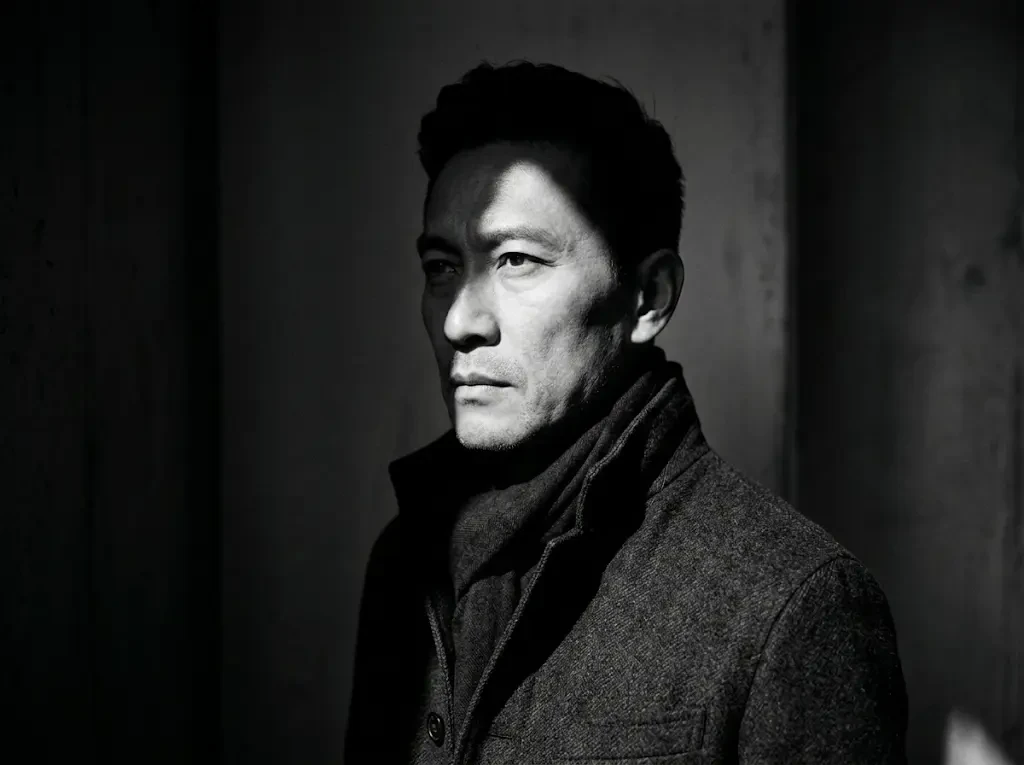
Doc Hayman is a name that tends to appear just outside the brighter glare of Hollywood fame. To many readers, he is first known as James Powell “Doc” Hayman, the son of actress Annie Potts and director-producer James Hayman. But the public record also shows a working creative figure who has built his own path through film and television production, with credits on projects including No One Will Save You, Renfield, Lisa Frankenstein, Hit Man, Young Sheldon, and NCIS: New Orleans. +1
That makes his story quieter than a celebrity profile but more interesting than a simple famous-family footnote. Doc has not built a public identity around interviews, red carpets, or constant self-promotion. His work is mostly the kind viewers feel without seeing: production support, set coordination, assistant-director work, and the daily labor that keeps film and television moving. For a reader searching his name, the clearest answer is this: Doc Hayman is Annie Potts’ son, but he is also a behind-the-scenes entertainment worker with his own professional record.
Early Life and Family Background
Doc Hayman was born James Powell Hayman on May 28, 1992, in Los Angeles, California, according to his IMDb profile. He grew up in a family where entertainment was not an abstract dream but part of everyday life. His mother, Annie Potts, had already become widely recognized for roles in Ghostbusters, Pretty in Pink, and Designing Women. His father, James Hayman, built a long career as a director, producer, cinematographer, and photographer.
That family background helps explain why Doc’s career ended up close to production rather than far from it. Los Angeles is full of children who grow up near sets, scripts, crews, and industry routines, but only some choose to stay in that world. Doc’s public record suggests he did not pursue fame in front of the camera. Instead, he moved toward the working side of the business, where reliability matters more than celebrity.
Doc is one of Annie Potts’ three sons. Potts welcomed her eldest son, Clay Samuel Senechal, in 1981 with her former husband B. Scott Senechal. She later married James Hayman in 1990, and the couple had two sons together: James Powell “Doc” Hayman and Isaac Harris “Harry” Hayman. People has identified Doc as Potts’ second son and the first of her two children with James Hayman. +1
The family’s creative streak runs through more than one branch. Clay Senechal became a writer and producer, while Harry Hayman has been described as private and focused on poetry after earlier acting experience. Doc’s path sits between those examples: creative, industry-connected, but not especially public. That balance has shaped the way his name appears online, where interest in him often comes through his mother’s fame rather than his own publicity.
Growing Up Around Annie Potts and James Hayman
Annie Potts’ career gave her family a rare vantage point on American film and television. She became familiar to one generation through Ghostbusters and Designing Women, then to younger viewers through Toy Story and Young Sheldon. For Doc, that meant growing up with a mother whose work carried across decades and audiences. It also meant seeing the less glamorous side of a long career: travel, production schedules, reinvention, and the pressure to keep working.
James Hayman brought a different model of creative life into the home. People has described him as an Emmy-nominated director, producer, and photographer, and reported that he and Potts met on the set of Breaking the Rules in the late 1980s before marrying in 1990. His credits and professional identity sit closer to the kind of work Doc would later do. That father-son connection is easy to overstate, but the influence is hard to ignore.
Still, it would be too simple to say Doc merely followed his parents. Children of actors and directors often face an odd mix of access and expectation. They may understand the industry earlier than others, but they also have to decide whether to live under a family name or make something separate from it. Doc appears to have chosen a lower-profile route, one that kept him close to film and television without turning him into a public personality.
That choice is part of what makes his biography difficult to write responsibly. There are few long interviews, few first-person accounts, and little evidence that he has sought public attention. The available facts are strongest around family relationships and screen credits. Anything beyond that requires care, especially where online biographies drift into confident claims about private life, income, personality, and lifestyle.
Education and Early Ambitions
Publicly verified information about Doc Hayman’s schooling is limited. Some online profiles claim he attended Muhlenberg College, but that detail is not as firmly supported by the strongest sources currently available. Because of that, it should be treated as an unconfirmed claim rather than a settled biographical fact. What can be said with more confidence is that his adult work has remained tied to creative production.
The same caution applies to early ambitions. It is tempting to imagine a child of Annie Potts and James Hayman growing up with a clear plan to enter entertainment, but the public record does not give that kind of inner-life detail. There are no widely cited interviews in which Doc lays out a childhood dream or explains his first steps into the industry. A careful biography has to leave that space open rather than fill it with invented motivation.
What the record does show is a practical professional direction. Doc’s credits are concentrated in production department roles and assistant-director-related work, not acting, celebrity hosting, or brand-driven entertainment. That tells readers something real about his interests and skills. He appears to have found a place in the machinery of production, where creative work depends on coordination, discipline, and trust.
Career in Film and Television Production
Doc Hayman’s strongest public record is his screen-credit history. IMDb lists him as James “Doc” Hayman and describes him as an assistant director known for No One Will Save You, Renfield, and Lisa Frankenstein. The same profile lists production department and additional crew credits on projects including NCIS: New Orleans, Ultra Violet & Black Scorpion, The Crossover, Quiz Lady, Hit Man, Young Sheldon, and M.I.A..
Production work can sound vague from the outside, but it is central to how sets run. Production assistants, staff members, and assistant directors help manage the movement of people, information, timing, equipment, and locations. Their work can mean keeping a shooting day on schedule, coordinating communication across departments, or solving small problems before they become expensive ones. These are not the roles that generate headlines, but they are part of the reason finished projects exist.
Doc’s credits suggest a career built through practical experience rather than one built around a single breakout moment. NCIS: New Orleans gave him work within a long-running network television environment. Films such as Renfield, Hit Man, Lisa Frankenstein, and No One Will Save You placed him near projects with different tones, budgets, and production demands. That range matters because crew work often develops through repetition across very different sets.
One of the more visible links in his career is Young Sheldon. People reported that Doc contributed to three episodes of the series, and IMDb lists him as production staff on three 2024 episodes. +1 The connection drew attention because Annie Potts played Connie “Meemaw” Tucker on the show. But the available evidence points to Doc’s contribution as behind-the-scenes work, not an acting appearance.
The Young Sheldon Connection
Young Sheldon brought Annie Potts to a new wave of viewers, many of whom knew her first as Meemaw rather than from her earlier film and television work. That renewed visibility helped drive fresh interest in her family. Readers who search for her children often find Doc because of his connection to the series. It is a rare point where mother and son’s professional worlds appear to overlap in a public credit.
The overlap should be described carefully. Doc did not become a public cast member on Young Sheldon, and there is no strong evidence that he used the show as a platform for celebrity. His credit belongs to production staff work, which fits his broader career pattern. That distinction keeps the story accurate and avoids turning a modest professional detail into a misleading headline.
There is also something revealing about the nature of that connection. Annie Potts stood in front of the camera as one of the show’s most beloved characters, while Doc worked in the production world that supports what the audience sees. Their names may sit in different parts of the credits, but both point to the same family’s long contact with television. In that sense, Young Sheldon is not just a famous title in Doc’s record; it is also a small window into how entertainment careers can pass through generations in different forms.
Music, DJ Work, and Creative Identity
Several public profiles describe Doc Hayman as a DJ and musician, and People has also identified him that way. That part of his life is harder to document in detail than his film and television work. Online sources sometimes connect him to New Orleans music circles and a performance name, but those claims vary in reliability. The safest account is that he has been publicly described as working in music while his best-documented credits are in production.
That said, the combination of production work and music is not unusual. Film and television sets attract people with several creative skills, especially those who understand timing, sound, atmosphere, and collaboration. A DJ or musician working in production may bring a strong sense of rhythm and mood to set life, even if that influence is not visible in a credit line. Doc’s reported music work fits the broader picture of a creative person who has chosen practical, behind-the-scenes outlets.
The available record does not support inflating his music career into a fully documented public discography. There is no major mainstream profile, award record, or widely cited interview that would justify sweeping claims about his standing as a musician. What can be said is more restrained but more credible. Doc Hayman appears to have pursued creative work across both screen production and music, while keeping much of that identity outside the celebrity press.
Marriage, Partner, and Children
Doc Hayman’s private life has attracted search interest because of his family connection to Annie Potts. People reported that he shares a son, Cassius, born in 2021, with partner Katrina Engle. +1 That makes Annie Potts a grandmother through Doc as well as through her older son Clay, who has a son named Silas. These family details are among the few personal facts reported by a reliable mainstream outlet.
Some websites describe Doc as married, but that claim is not consistently supported by the strongest reporting available. For that reason, it is more accurate to identify Katrina Engle as his partner unless a reliable source confirms a marriage. This is a small distinction, but it matters in a biography. Personal relationships should not be upgraded or rewritten simply because search pages repeat a convenient label.
Doc’s role as a father also helps explain why privacy matters here. Cassius is a child, and the public interest in him exists only because of adult family connections. A responsible profile should not press beyond what has been clearly reported. The meaningful fact is that Doc is part of a growing family and that Potts has spoken publicly over the years about the importance of her children and grandchildren.
Public Image and Private Boundaries
Doc Hayman’s public image is defined largely by restraint. He is searchable, but he is not heavily profiled. He is connected to famous people, but he does not appear to live as a celebrity. That combination creates a gap that low-quality biography sites often try to fill with confident but thinly sourced details.
The truth is less dramatic. Doc seems to occupy a familiar but undercovered position in entertainment: close to fame, useful to productions, and mostly private. His professional credits are public because film and television credits are public. His family ties are public because Annie Potts has lived much of her career in view of an audience.
Beyond that, much remains his own. There is no need to invent a larger public persona when the known facts already tell a clear story. He is a working creative professional from a famous family who has kept his own life fairly quiet. In an industry built on attention, that quietness is itself a choice worth respecting.
Net Worth and Income Sources
There is no verified public net worth for Doc Hayman. Search results may present estimates, but those figures should be treated with caution unless they are supported by financial records, credible reporting, or direct confirmation. In Doc’s case, the available reliable sources do not provide a clear number. Any precise claim about his wealth would be speculative.
His known income sources likely relate to film and television production work, and he has also been publicly described as a DJ and musician. Crew work can vary widely in pay depending on the role, project, union status, location, and length of employment. A production staff credit on one project does not tell readers enough to calculate annual income. That is why a responsible biography should avoid pretending that a net worth estimate is more than a guess.
The same standard should apply to inherited wealth or family money. Annie Potts and James Hayman have had long careers, but their success does not automatically reveal Doc’s finances. Adult children of public figures often have separate financial lives, and there is no credible basis for assigning him a share of anyone else’s fortune. The most accurate answer is plain: Doc Hayman’s net worth has not been publicly verified.
Relationship With Annie Potts
Annie Potts has often been described as a devoted mother, and reporting on her family shows a close bond with her sons. People has covered her three children and described her pride in their creative paths and family lives. +1 Doc’s place in that family is both personal and professional, because his work keeps him near the industry that shaped his parents’ lives. That closeness gives his story a natural connection to Potts’ long career.
Potts’ own life helps frame Doc’s upbringing. She worked through several eras of Hollywood, moving from film roles to sitcom success, voice acting, and later prestige within a beloved network comedy. That kind of career requires stamina and adaptability. A child growing up around it would have seen not only the applause but the work behind it.
There is no public evidence that Doc has tried to trade heavily on his mother’s fame. His credits are tied to production jobs rather than celebrity appearances. That may be one reason his profile has remained relatively low, even as search interest in Annie Potts’ family has grown. He is part of her public story, but he has not made himself the center of it.
Relationship With James Hayman
Doc’s father, James Hayman, offers another important part of the story. James Hayman has worked behind the camera for decades as a director, producer, cinematographer, and photographer. People has reported that he directed and produced television projects and that he and Annie Potts have been married since 1990. That professional background gives Doc a direct family model for working away from the actor’s spotlight.
The father-son connection is especially relevant because Doc’s career sits closer to his father’s side of the industry. Acting may be the most visible part of Hollywood, but production and direction are where the daily structure of a set is built. James Hayman’s career would have made that structure familiar. Doc’s own credits suggest comfort with that world.
That does not mean his career is simply an extension of his father’s. A production worker earns trust through performance on set, not through family biography alone. The hours are long, the work is practical, and the margin for mistakes can be small. Doc’s growing list of credits indicates that he has continued to work within that demanding environment.
Siblings and the Wider Family
Doc’s older half-brother, Clay Samuel Senechal, was born in 1981 and has built his own career as a writer and producer. People has reported that Clay graduated from Brown University and worked on projects including the Netflix animated film Arlo the Alligator Boy, which featured Annie Potts’ voice. Clay’s career adds another creative branch to the family. It also shows that the Potts-Hayman-Senechal family has more than one connection to storytelling.
Doc’s younger brother, Isaac Harris “Harry” Hayman, was born in 1995. Public reporting describes Harry as more private, with earlier acting experience and a later focus on poetry. That makes him harder to profile in detail, but it also reinforces a pattern. The siblings appear to share creative interests without sharing the same level of public exposure.
Their family story is not one of identical paths. Clay moved into writing and producing, Doc into production and music, and Harry into more private creative work. Annie Potts’ public comments and social media presence have often emphasized family closeness, though the sons themselves vary in how visible they are. That mix of connection and independence is part of why readers remain curious about them.
Public Confusion Around the Name “Doc Hayman”
The name “Doc Hayman” creates some natural confusion. Readers sometimes wonder whether “Doc” is a professional title, a stage name, or a legal first name. The public record identifies him as James Powell Hayman, with “Doc” used as a nickname. IMDb lists “Doc” as his nickname and uses the professional name James “Doc” Hayman.
That confusion has been amplified by search-driven biography sites. Some pages call him “Doc James Hayman,” while others use “James Powell Hayman” or “James ‘Doc’ Hayman.” The most careful usage is James Powell “Doc” Hayman, because it reflects both the fuller name reported by People and the nickname used in his screen credits. Search users may type “doc hayman,” but the full identity is more precise.
This also helps separate him from any unrelated person with the same or similar name. There is no evidence in the reliable sources reviewed that he is a medical doctor. The “Doc” label should be understood as a nickname tied to his public credit identity. That small clarification answers one of the most common questions about him.
Current Status
As of 2026, Doc Hayman’s public record places him in film and television production, with recent credits extending into projects released or listed in the mid-2020s. IMDb includes a 2026 television credit for M.I.A., including additional second assistant director work. People’s 2026 reporting also describes him as working in film and television production, while identifying him as a DJ and musician. Those sources suggest he remains active in creative work.
There is no reliable sign that he has shifted into celebrity life or a public-facing entertainment brand. His name appears in credits and family coverage, not in a steady stream of interviews or publicity campaigns. That makes the latest version of his story consistent with the earlier one. He remains close to the entertainment industry, but mostly outside the spotlight.
For readers, that may be the most useful update. Doc Hayman is not a vanished public figure or a mystery celebrity. He is a private creative professional with a public family connection and a real body of production work. His story is current because the credits continue, not because he has turned his life into a spectacle.
Frequently Asked Questions
Who is Doc Hayman?
Doc Hayman is James Powell “Doc” Hayman, the son of actress Annie Potts and director-producer James Hayman. He is best known publicly as a film and television production professional with credits on projects such as No One Will Save You, Renfield, Lisa Frankenstein, Hit Man, Young Sheldon, and NCIS: New Orleans. He has also been described by People as a DJ and musician. +1
How old is Doc Hayman?
Doc Hayman was born on May 28, 1992, in Los Angeles, California, according to IMDb. That makes him 33 years old as of May 16, 2026, just before his 34th birthday. His age is often searched because many readers first encounter him through coverage of his mother, Annie Potts.
Is Doc Hayman Annie Potts’ son?
Yes, Doc Hayman is Annie Potts’ son with her husband, James Hayman. Potts has three sons: Clay Samuel Senechal, James Powell “Doc” Hayman, and Isaac Harris “Harry” Hayman. People has reported those family relationships in its coverage of Potts’ children. +1
What does Doc Hayman do for a living?
Doc Hayman works in film and television production, with public credits in production department, additional crew, and assistant-director-related roles. People has also described him as a DJ and musician. The most verifiable part of his career is his screen-credit record, while some details about his music work are less fully documented in mainstream sources. +1
Did Doc Hayman work on Young Sheldon?
Yes, Doc Hayman is publicly connected to Young Sheldon through behind-the-scenes production work. People reported that he contributed to three episodes, and IMDb lists him as production staff for three 2024 episodes. +1 He should not be described as a cast member unless a separate acting credit is confirmed.
Is Doc Hayman married?
Reliable public reporting identifies Katrina Engle as Doc Hayman’s partner and says they share a son named Cassius, born in 2021. +1 Some websites describe him as married, but that detail is not consistently confirmed by the strongest sources available. The careful wording is that he has a partner and a son.
What is Doc Hayman’s net worth?
Doc Hayman’s net worth has not been publicly verified. Online estimates should be treated as speculation unless they cite credible financial evidence, which most do not. His known income sources appear to include film and television production work, with music work also publicly reported, but those facts are not enough to calculate personal wealth.
Conclusion
Doc Hayman’s biography is best told with restraint. He is close to Hollywood history through his mother, Annie Potts, and his father, James Hayman, but his own life has unfolded mostly behind the camera. That makes him interesting in a quieter way than many celebrity relatives. His public record is about work, family, and privacy rather than fame for its own sake.
The confirmed facts show a man born into a creative household who found his own place in production. His credits connect him to television, film, and a changing entertainment industry, while his reported music work suggests a broader creative identity. What the public does not know should not be treated as empty space to fill. A serious biography leaves room for privacy.
Doc Hayman matters because his story reflects a more realistic version of life near fame. Not everyone raised around actors becomes a star, and not every meaningful entertainment career happens in front of the camera. His name may draw searches because of Annie Potts, but the fuller picture is of a working creative professional who has chosen a quieter lane and kept moving forward there.
