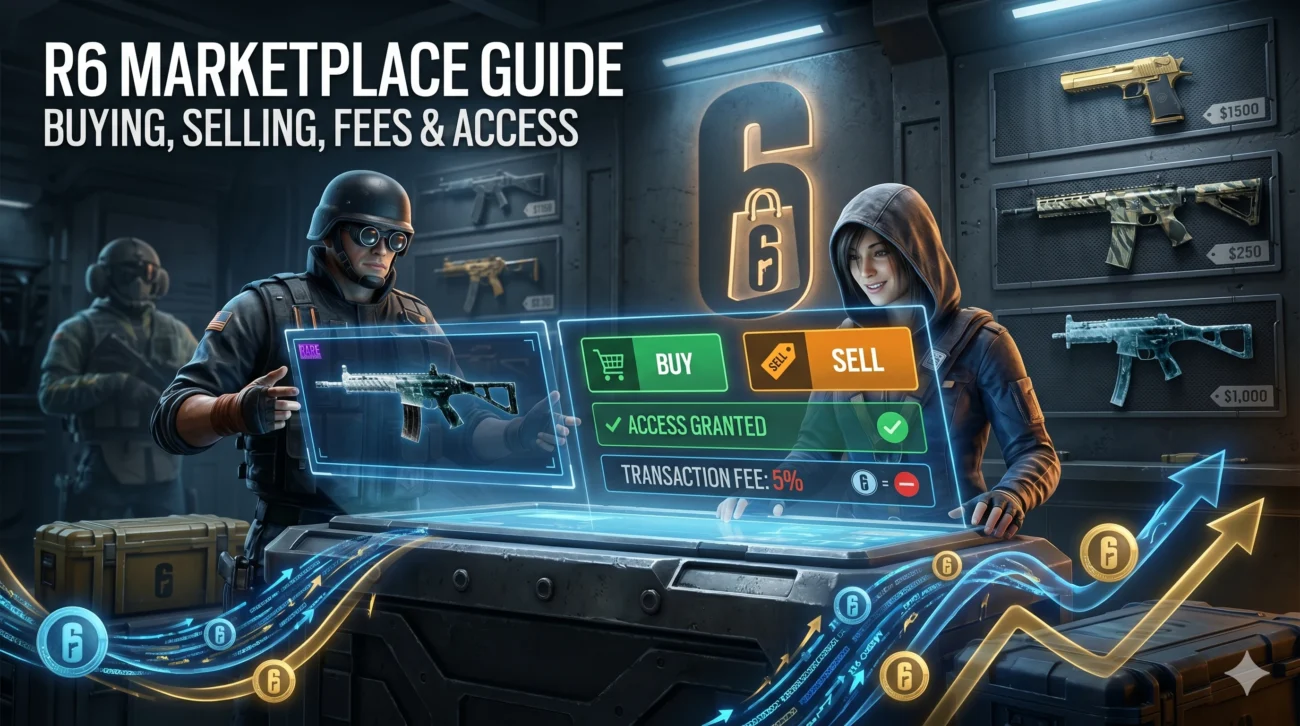
The R6 Marketplace turned old Rainbow Six Siege cosmetics into something players now track, price, and trade with real intent. A weapon skin that once sat forgotten in an inventory can now become R6 Credits, while an older seasonal item can reappear for players who missed it years ago. That’s the appeal, but it’s also where confusion starts. The Marketplace is official, useful, and limited by design, so knowing the rules matters before you buy or sell anything.
What the R6 Marketplace Actually Is
The R6 Marketplace is Ubisoft’s official trading platform for Rainbow Six Siege cosmetic items. It lets eligible players buy and sell approved skins and other tradable items using R6 Credits. It isn’t a cash marketplace, and it doesn’t support direct swaps between players. Every transaction runs through Ubisoft’s web-based order system.
That distinction matters because Siege players often talk about item “value” as if it means real money. On the official Marketplace, value means R6 Credits inside Ubisoft’s economy. You can use those credits for eligible in-game purchases, but you can’t withdraw them to a bank account. Frankly, that’s one reason the system is safer than the old gray-market trading culture around rare skins.
Ubisoft began testing the Marketplace before opening it more widely during Year 9 Season 2, Operation New Blood, in June 2024. The wider rollout made the system far more useful because markets need enough buyers and sellers to function. A small beta can create strange prices, but a broader player base gives the order book more life. That doesn’t make every price fair, though, and buyers still need to think before chasing rare cosmetics.
How Buying and Selling Works
Buying on the R6 Marketplace works through purchase orders. You pick an eligible item, enter the highest amount of R6 Credits you’re willing to pay, and wait for the system to match your order. If a seller has listed the item at or below your price, the transaction can complete automatically. If no match exists, your order stays open until it matches, expires, or you cancel it.
Selling uses the same idea from the other side. You choose an eligible item from your inventory, set the R6 Credit price you want, and create a sale order. While the order is active, Ubisoft removes that item from your usable inventory. Once a buyer matches your price, the sale completes and the credits arrive after the Marketplace fee.
There’s a catch, though. Ubisoft takes a 10% transaction fee from completed sales, so sellers never receive the full listed price. A sale listed at 1,000 R6 Credits pays 900 R6 Credits after the fee. That simple piece of math changes how you should price anything you don’t want to undersell.
Active orders also have limits. Ubisoft allows up to five active purchase orders and five active sale orders at a time. Orders last for 30 days before expiring if they don’t match. That limit keeps the Marketplace manageable, but it also forces players to choose which items matter most.
Who Can Use the R6 Marketplace
Not every Rainbow Six Siege account can use the Marketplace. Ubisoft requires players to reach at least Level 25, have 2-Step Verification enabled, and have no account sanctions. The account also needs recent XP activity, which means a dormant account may need to play before Marketplace access works. These rules are annoying for some players, but they make sense in a system where account security matters.
The Level 25 requirement helps block throwaway accounts from flooding the system. The 2-Step Verification rule protects accounts from basic credential theft, which is a serious issue when inventories contain rare or desirable cosmetics. Ubisoft also says sanctions can affect access, so players with account discipline problems may find themselves locked out. In practice, the Marketplace rewards clean, active, secured accounts.
Temporary restrictions can also surprise players. A recent email or password change may affect Marketplace access for a period of time. That can feel frustrating if you’re trying to grab a skin before the price moves. But here’s the thing: security delays are there because account takeovers often start with login changes.
What Items Can Be Traded
The Marketplace doesn’t include every cosmetic in Rainbow Six Siege. Ubisoft decides which items are tradable, and only eligible items appear in the buying or selling interface. If you can’t see an item in your Sell tab, that usually means it can’t be traded at that moment. It doesn’t automatically mean your inventory is broken.
Current-season items are one major limitation. Ubisoft’s rule is that items from the current season don’t become tradable until the next season arrives. That creates a delay between earning or buying a new item and being able to sell it. For players hoping to flip new cosmetics immediately, that rule changes the plan.
Some items may also be excluded for other reasons. Ubisoft doesn’t treat every cosmetic as a free-trading asset, especially if it connects to promotions, bundles, limited offers, or other special conditions. The practical advice is simple: trust what the official Marketplace shows, not what a forum post claims should be tradable. If the item isn’t listed for sale from your account, you can’t force it into the market.
Pricing, Fees, and Market Behavior
Prices on the R6 Marketplace move because players set orders. Ubisoft doesn’t publish one fixed price for every item and require everyone to follow it. Buyers enter what they’re willing to pay, sellers enter what they want to receive, and the system matches compatible orders. That creates a real market, even though it stays inside R6 Credits.
Rare skins can attract high asking prices, but asking price and selling price aren’t the same thing. A seller can list an item for a huge number of credits and still get no buyer. The more useful signal is whether purchase orders are actually matching at that range. Here’s what most people get wrong: a visible high price doesn’t prove demand exists.
The 10% seller fee also affects behavior. Sellers often raise listing prices to protect what they receive after the fee. Buyers see that higher price and may assume the item has become more valuable, even when part of the increase is just fee math. The numbers tell a different story once you calculate net proceeds.
Ubisoft has also added Marketplace tools such as price history and graphs, which help players judge whether a listing looks normal. Those tools matter most for rare items with volatile pricing. If a skin usually trades far below the current ask, patience may save you thousands of credits. If the price has been climbing steadily, waiting may cost more instead.
Risks, Scams, and What Players Should Avoid
The safest version of R6 trading happens inside Ubisoft’s official Marketplace. That sounds obvious, but Siege communities have long had third-party offers, private deals, account sales, and “cheap credits” claims. Those routes can create account risk, payment disputes, or outright theft. If someone wants you to leave the official system, ask why they benefit from that.
The official Marketplace doesn’t let you cash out, and that frustrates some players. But that limitation also removes many of the ugliest incentives from external trading. Once real-money payouts enter the picture, scams become more aggressive and account theft becomes more profitable. Ubisoft’s system is narrower, but safer.
Account security should be treated as part of Marketplace strategy. Turn on 2-Step Verification, use a strong password, and avoid sharing login details with anyone offering to “help” sell items. A rare skin won’t matter if the whole account disappears. And if a deal sounds too clean, too cheap, or too urgent, it probably deserves suspicion.
Practical Advice Before You Place an Order
Before buying, decide what the item is worth to you rather than reacting to the first price you see. The Marketplace order system can reward patience, especially for items with steady supply. If you set a reasonable purchase order and wait, you may avoid overpaying during a short spike. That said, very rare items may not return to your target price quickly.
Before selling, check whether you actually want to lose the item. Once a sale matches, you shouldn’t treat it like a reversible mistake. Active orders can be canceled before fulfillment, but completed transactions are different. If the skin has sentimental value or you use it often, the credits may not feel worth it later.
Resale timing also matters. Ubisoft says purchased items have a 15-day waiting period before they can be resold. That rule reduces fast flipping and makes short-term speculation harder. So what does this actually mean? If your plan depends on buying today and selling tomorrow, the official system won’t support it.
Players should also remember that R6 Credits spent in the Marketplace are still part of a closed game economy. A good deal only matters if you actually value the item or the credits. Don’t treat the Marketplace like an investment platform. Treat it like a better way to manage cosmetics you already care about.
Frequently Asked Questions
Is the R6 Marketplace official?
Yes, the R6 Marketplace is Ubisoft’s official trading platform for Rainbow Six Siege cosmetics. It lets eligible players buy and sell approved items using R6 Credits through Ubisoft’s own system.
Can I sell R6 skins for real money?
No, the official R6 Marketplace doesn’t let players sell skins for cash. Completed sales pay R6 Credits, which remain inside Ubisoft’s game economy.
Why can’t I access the R6 Marketplace?
You may not meet Ubisoft’s access rules yet. Accounts generally need Level 25, 2-Step Verification, recent XP activity, and no active sanctions affecting access.
Why can’t I sell a specific item?
The item may not be eligible for trading. Current-season items also aren’t tradable until the next season, and some special cosmetics may remain excluded.
How much is the R6 Marketplace fee?
Ubisoft takes a 10% fee from completed sales. If you sell an item for 1,000 R6 Credits, you receive 900 R6 Credits after the fee.
How long do Marketplace orders last?
Marketplace purchase and sale orders last up to 30 days. If an order doesn’t match during that period, it expires unless you cancel or adjust it earlier.
Conclusion
The R6 Marketplace is a useful tool, but it rewards players who understand the rules. It isn’t a cash machine, and it isn’t a free-for-all trading room. It’s a controlled Ubisoft system built around eligible cosmetics, R6 Credits, order limits, and account security.
That control can feel restrictive, especially if you’re sitting on rare items or chasing a skin from an older season. Still, the limits are part of why the official Marketplace is safer than private trading. You give up some freedom, but you gain a system with clearer rules and fewer ways to get burned.
My advice is simple: use the Marketplace slowly. Check prices, account for the 10% fee, protect your login, and don’t sell anything you’ll miss. As Siege keeps aging, the Marketplace will likely become even more central to how players value the history inside their inventories.
