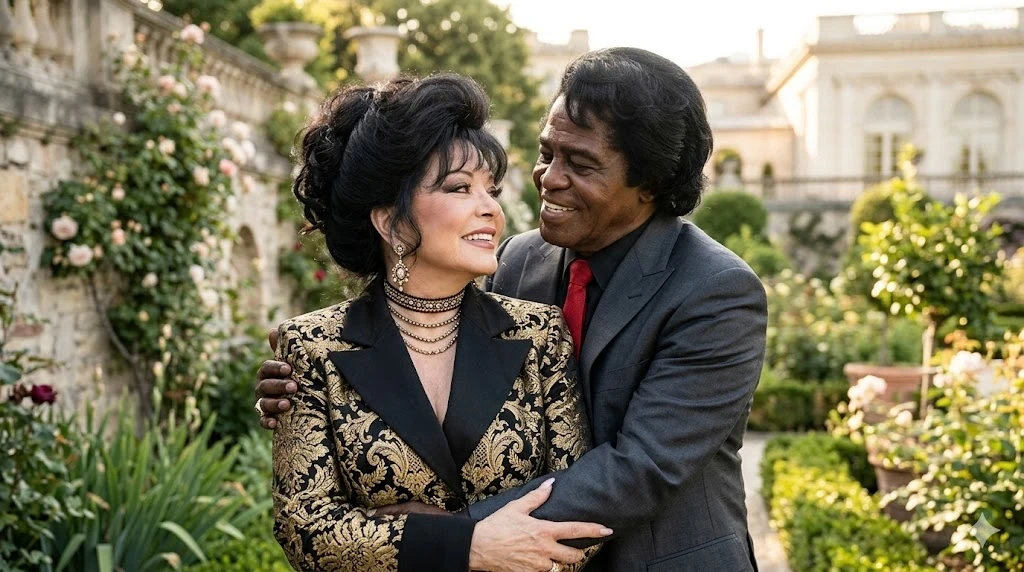
Adrienne Rodriguez is remembered, first and most often, as the third wife of James Brown. That fact is true, but it is also too small for the weight her name still carries. Her life has become a search query because it sits at the crossroads of fame, domestic turmoil, sudden death, and the long shadow cast by one of the most influential performers in American music.
The verified record around Rodriguez is thinner than many online biographies suggest. She did not leave behind a large public archive, and much of what is written about her today comes from brief news reports, recycled celebrity summaries, and later accounts of Brown’s life. A careful biography has to move slowly through that record, giving readers what is known while making room for what remains uncertain.
What can be confirmed is meaningful. Adrienne Lois Rodriguez Brown was married to James Brown from 1984 until her death in January 1996, and contemporary reporting described their marriage as troubled by repeated assault allegations. She died in Los Angeles after cosmetic surgery, and the Los Angeles County coroner’s office later ruled the death accidental, citing heart disease, PCP, other drugs found in her system, respiratory distress, pneumonitis, and her weakened post-surgical condition.
Early Life and Family Background
Adrienne Rodriguez’s early life is one of the hardest parts of her story to document with confidence. Many online profiles give a birth date of March 9, 1950, and Find a Grave lists her as Adrienne Lois Rodriguez Brown, born in 1950 and deceased in 1996. Contemporary news reports around her death, though, sometimes gave her age as 45, which creates a small but real uncertainty about the exact year or age used in public accounts.
Little reliable reporting is available about her parents, childhood home, schooling, or early family life. That absence matters because it is easy to fill the blank space with attractive but unsupported detail. Some recent websites describe her upbringing, ethnicity, education, and artistic ambitions in confident terms, but many of those claims are not tied to primary documents or strong contemporary reporting.
The more responsible approach is to say that Rodriguez entered the public record largely through her adult life and marriage. She appears not as a celebrity with a long press trail, but as a woman whose private life became public because of her connection to Brown. That imbalance has shaped nearly every later version of her biography.
Work Before and Around Fame
The strongest contemporary detail about Rodriguez’s work comes from UPI, which reported after her death that she had worked as a hair stylist for television programs, including “Solid Gold.” That places her within the entertainment business before her name became tied to Brown’s in headlines. It also suggests she had her own working life in a field that demanded taste, discipline, and proximity to performers.
Some later online biographies describe Rodriguez as a singer, songwriter, or musician. Those claims may have come from family recollection, informal accounts, or repeated web summaries, but they are difficult to verify through widely available credits or strong press records. A biography written for readers should not present those claims as settled fact unless better documentation is available.
This does not mean Rodriguez lacked creative interests or talent. It means the surviving public record does not support a fully developed account of a music career in the way it supports her work as a hair stylist and her marriage to Brown. The distinction is important because women connected to famous men are often either erased or embellished, and neither treatment gives them a fairer story.
Marriage to James Brown
Adrienne Rodriguez married James Brown in 1984, becoming his third wife. Brown was already a towering cultural figure by then, known worldwide as the “Godfather of Soul” and celebrated for his force as a singer, bandleader, dancer, and architect of funk. His public identity was larger than most entertainers’ lives, and marriage to him meant entering a world of constant attention, pressure, touring, legal matters, and myth.
Brown’s fame was built on extraordinary work. He changed American popular music through rhythm, stagecraft, band discipline, and songs that became part of the country’s cultural memory. But his personal life carried serious turmoil, and Rodriguez’s marriage to him became part of that public record.
The marriage lasted until Rodriguez’s death in 1996. During those years, contemporary reports and later accounts described repeated allegations of violence. UPI reported that Rodriguez accused Brown of assaulting her three times and later dropped the charges, while Brown denied beating her.
A Public Marriage Marked by Trouble
Rodriguez’s relationship with Brown cannot be responsibly described as only glamorous or only tragic. It was a marriage to a famous, powerful artist, and it was also a marriage repeatedly described in news coverage as volatile. Public reporting around Brown often moved between reverence for his music and concern over his arrests, legal problems, and private conduct.
The allegations involving Rodriguez were part of a wider public record about Brown’s treatment of women in his life. In 2024, People reported that Brown’s daughters Deanna Brown Thomas and Yamma Brown discussed witnessing him abuse their mother, Deidre Jenkins, and later trying to reconcile love for their father with the harm they saw. That family context does not prove every allegation involving Rodriguez, but it makes clear that violence was not a stray footnote in Brown’s story.
This is where writing about Rodriguez requires care. Dropped charges do not erase allegations, and allegations do not allow a writer to invent scenes or motives that are not in the record. The most accurate phrasing is also the most sober: Rodriguez made repeated assault accusations, Brown denied beating her, and the marriage was reported at the time as deeply troubled.
Living in the Shadow of a Legend
James Brown’s fame shaped how Rodriguez was seen while she was alive and how she is remembered now. In public memory, Brown is a giant: a singer whose influence runs through soul, funk, hip-hop, dance, and live performance. That scale can make everyone around him appear smaller, even when their lives were deeply affected by his choices.
Rodriguez’s public image was never fully hers to control. She entered the press most often through Brown’s name, Brown’s legal problems, Brown’s marriage, and Brown’s grief after her death. The result is a record that tells readers more about the machinery of celebrity than about Rodriguez’s daily life.
That does not make her unknowable, but it does make her biography incomplete. We can see the outlines: a woman who worked in entertainment, married a major artist, endured a highly public marriage, and died suddenly in midlife. What we cannot honestly do is pretend to know every private hope, fear, or family detail that the record does not preserve.
Her Death in January 1996
Adrienne Rodriguez died on January 6, 1996, in Los Angeles. UPI reported that she had undergone cosmetic surgery days earlier and was later admitted to a hospital in a coma. Early reports said the cause of death was not immediately clear, and officials did not suspect foul play while they awaited further medical findings.
The final coroner’s ruling, reported by UPI in February 1996, found that her death was accidental. The report said autopsy results pointed to a combination of heart disease and PCP, with Valium, Demerol, and morphine also found in her system. It also cited adult respiratory distress, pneumonitis, and the weakening effect of her recent surgery.
That finding is more complex than the shorthand often repeated online. Rodriguez did not simply “die from plastic surgery,” though surgery was part of the medical timeline. The available reporting describes a combination of medical vulnerability, drug findings, respiratory complications, and post-surgical weakness.
Why Her Death Is Often Called Mysterious
Rodriguez’s death is often described online as mysterious, but that word can mislead readers. There was uncertainty in the first days after she died because the coroner had not completed the full review. Once the autopsy findings were reported, the official ruling was accidental.
The confusion has lasted because the circumstances invite speculation. She was relatively young, she had recently undergone cosmetic surgery, and she had been married to a man whose private life was already the subject of disturbing allegations. Those facts make her death feel loaded even when the official finding does not support claims of homicide.
A fair biography should not turn that uncertainty into drama. The strongest wording is simple: Rodriguez died suddenly after surgery, and the coroner ruled the death accidental after citing several medical and toxicological factors. Rumors have persisted, but rumors are not the same as evidence.
Family, Children, and Private Life
Public information about Rodriguez’s family life is limited and often inconsistent. Some online biographies claim that she and James Brown had children together, but that claim is not well supported by stronger mainstream reporting. Brown had several children from his relationships, yet Rodriguez’s role as a mother or stepmother is not clearly documented in the most reliable public sources.
This is an area where restraint matters. A person’s family history should not be filled in because readers expect every biography to include children, siblings, and household details. If public records do not clearly establish those facts, the honest answer is that they remain uncertain.
What is clear is that Rodriguez occupied a difficult place within Brown’s family story. She was married to him for more than a decade, during years marked by legal trouble, public scrutiny, and the ongoing demands of his career. Even without a full private record, that position alone suggests a life lived close to both privilege and pressure.
Money, Lifestyle, and Net Worth Claims
Readers often search for Adrienne Rodriguez’s net worth, but credible figures are hard to find. Some websites assign estimates to her, often ranging in the hundreds of thousands of dollars, but those figures are not supported by clear estate documents, employment records, or financial reporting. They should be treated as guesses rather than verified facts.
Her income sources that can be discussed with more confidence are limited. She was reported to have worked as a television hair stylist, and she was married to James Brown, whose career brought significant earnings over many decades. But marriage to a wealthy celebrity does not automatically tell us what assets she personally controlled, what she earned, or what her estate was worth.
Brown’s own finances later became famously complicated, especially after his death in 2006, when disputes over his estate dragged on for years. That later legal history should not be retroactively used to estimate Rodriguez’s money. The most accurate answer is that no reliable public net worth figure for Adrienne Rodriguez has been established.
Public Image and Media Treatment
Rodriguez’s public image was shaped by a narrow set of stories. She was covered as Brown’s wife, as a woman involved in domestic violence allegations, and as the subject of sudden-death reporting. That leaves very little space for the ordinary parts of a life: friendships, work habits, humor, taste, faith, private loyalties, or personal ambitions.
The celebrity press often treats people in Rodriguez’s position as supporting characters. Their names become searchable because of the famous person next to them, not because the public has been given a full account of who they were. Rodriguez’s biography is a reminder that public visibility is not the same thing as being understood.
The recent return of interest in James Brown has kept her name alive. A&E’s 2024 documentary series “James Brown: Say It Loud” revisited Brown’s career, cultural force, family life, and personal failures for a new audience. Whenever Brown’s story is reopened, Rodriguez’s story comes with it because she was part of the private history that complicates the public legend.
What Makes Her Story Matter Now
Adrienne Rodriguez matters because her life shows how easily a woman can be remembered only through a famous man’s damage. Brown’s music is central to American culture, and his influence is not in dispute. Yet the same public memory that celebrates his genius must also make room for those who experienced the cost of his private behavior.
Her story also matters because it forces a more honest kind of biography. Readers want certainty, especially online, but Rodriguez’s record does not allow certainty on every point. A truthful profile has to say what is known, what is disputed, and what has been repeated without proof.
That kind of care is not cold or evasive. It is a form of respect. Rodriguez deserves a story that does not exaggerate her career, sensationalize her death, or reduce her to a victim without voice.
Common Misunderstandings About Adrienne Rodriguez
One common misunderstanding is that Rodriguez’s life is fully documented. It is not. The available record contains important facts, but it leaves major gaps around her early years, family background, education, and personal ambitions.
Another misunderstanding is that her death remains officially unexplained. Early reports did describe uncertainty, but later reporting said the Los Angeles County coroner’s office ruled the death accidental. Calling the case unsolved ignores that official finding and blurs the difference between medical complexity and criminal mystery.
A third misunderstanding is that her marriage to Brown can be treated as a simple celebrity love story. The record includes repeated abuse allegations, denials by Brown, and dropped charges. Any serious account has to include those facts without turning them into either gossip or a courtroom verdict.
Where Adrienne Rodriguez Is Now in Public Memory
Adrienne Rodriguez died in 1996, but her name continues to appear wherever readers revisit James Brown’s personal life. Find a Grave lists her burial in Augusta, Georgia, a city deeply tied to Brown’s biography and public legacy. Even in death, her public identity remains attached to the geography and mythology of his story.
Yet there is a quiet shift in how readers approach people like Rodriguez. The old celebrity model often asked audiences to admire the artist and look away from the private harm around him. Newer audiences are more likely to ask who paid the price for the legend.
Rodriguez’s place in public memory is still fragile because the facts are scattered and her own voice is hard to find. But the renewed attention to Brown’s life gives writers and readers a chance to treat her with more care. She should be remembered not as a rumor or a tragic aside, but as a person whose life deserves the same factual seriousness given to the famous man beside her.
Frequently Asked Questions
Who was Adrienne Rodriguez?
Adrienne Rodriguez, also known as Adrienne Lois Rodriguez Brown, was the third wife of James Brown. She married Brown in 1984 and remained married to him until her death in January 1996. She is most often discussed today because of that marriage, the abuse allegations reported during it, and the circumstances of her sudden death.
What did Adrienne Rodriguez do for a living?
The clearest contemporary reporting describes Rodriguez as a former hair stylist for television programs, including “Solid Gold.” Some later websites describe her as a singer or songwriter, but those claims are not as strongly documented. Based on the available record, her work in television styling is the most reliable career detail.
Was Adrienne Rodriguez James Brown’s wife?
Yes, Adrienne Rodriguez was James Brown’s third wife. They married in 1984 and were still married when she died in 1996. Their marriage drew public attention because of Brown’s fame and because of repeated allegations of domestic violence reported during the relationship.
How did Adrienne Rodriguez die?
Rodriguez died on January 6, 1996, after cosmetic surgery and a later medical crisis in Los Angeles. UPI reported that the Los Angeles County coroner’s office ruled her death accidental. The reported factors included heart disease, PCP, other drugs found in her system, respiratory distress, pneumonitis, and her weakened condition after surgery.
Did James Brown abuse Adrienne Rodriguez?
Contemporary reporting says Rodriguez accused Brown of assaulting her multiple times, and Brown denied beating her. UPI reported that she later dropped the charges. The most accurate public wording is that there were repeated allegations during the marriage, that Brown denied them, and that the charges did not result in a lasting public conviction tied to those specific reports.
Did Adrienne Rodriguez have children?
Reliable public information does not clearly confirm that Adrienne Rodriguez and James Brown had children together. Some online biographies make that claim, but stronger reporting does not clearly support it. Because of that uncertainty, it should not be presented as confirmed fact.
What was Adrienne Rodriguez’s net worth?
There is no reliable public net worth figure for Adrienne Rodriguez. Some websites publish estimates, but they do not usually provide estate records, financial documents, or credible reporting to support those numbers. The safest answer is that her personal wealth is unknown.
Conclusion
Adrienne Rodriguez’s biography is not a neat story, and that may be the most honest thing to say about it. She lived close to extraordinary fame, but the surviving record gives us only fragments of her own life. Those fragments still deserve care because they belong to a real person, not just to the history of James Brown.
Her public story carries beauty and pain in unequal measure. There was the glamour of proximity to a music legend, the work she did in entertainment, and the status that came with being married to one of the most recognizable performers in the world. There were also repeated allegations of violence, public scrutiny, and a sudden death that has been simplified too often by later retellings.
The challenge is to remember her without inventing her. Rodriguez should not be reduced to a famous wife, a victim, or an internet mystery. She was Adrienne Rodriguez: a woman whose life remains partly hidden, but whose story still asks readers to look past the legend and pay attention to the person standing beside it.
