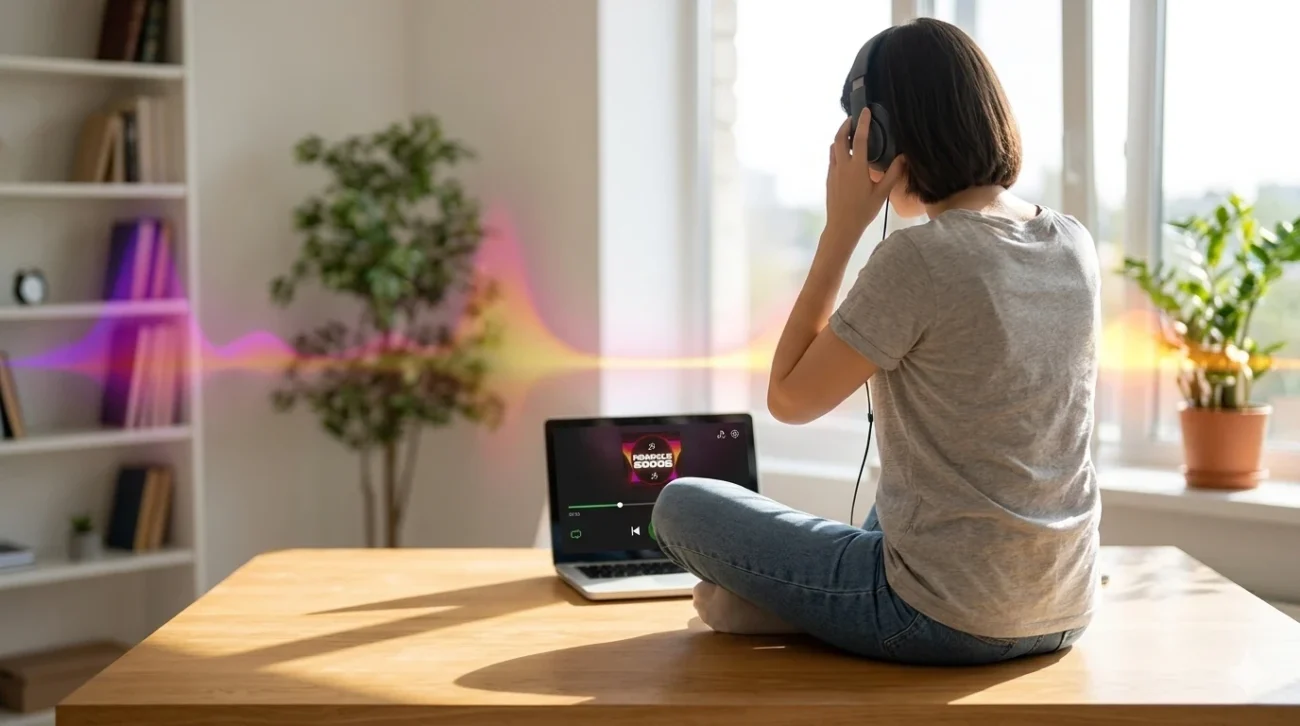
Heardle 2000s is not a person, though people search for it as if it has a life story: where it came from, what happened to it, whether it still exists, and why so many players keep returning to it. Its biography begins with a simple ritual familiar to anyone who lived through the Wordle boom: press play, hear a tiny clip, make a guess, and hope your memory moves faster than your doubt. The game’s subject is the 2000s, but its real material is recognition, the strange thrill of knowing a song before you can name it.
The name refers to a decade-themed version of Heardle, the song-guessing game that became one of the most beloved Wordle-inspired puzzles of the early 2020s. The original Heardle was acquired by Spotify in July 2022 and shut down less than a year later, on May 5, 2023. After that, Heardle-style games lived on through independent sites, fan projects, and themed spin-offs, including several devoted to music from 2000 through 2009.
Heardle 2000s matters because it sits at the meeting point of three powerful forces: online puzzle culture, music nostalgia, and the fractured way people now remember pop history. For some players, it is a quick daily game. For others, it is a door back into the era of iPods, LimeWire, TRL, ringtone rap, pop-punk choruses, early YouTube, and songs that seemed to follow them everywhere. Its story is not about celebrity in the usual sense, but about how a small browser game became a container for a generation’s musical memory.
What Heardle 2000s Is
Heardle 2000s is a music guessing game built around songs associated with the 2000s. The usual format gives players a very short audio clip from the start of a song, then asks them to identify the track in a limited number of guesses. Each wrong guess or skip unlocks a longer portion of the intro, making the game easier as the round continues.
Most versions follow the original Heardle pattern of six attempts. A player starts with only a second or so of music, then gradually hears more until the title becomes clear or the attempts run out. The pleasure comes from catching a song early, before the chorus, before the obvious lyric, and often before the singer has even arrived.
There is no single official Heardle 2000s now. That is the first fact readers need to understand. Several sites use the name or a close variation, including decade-based Heardle projects and music quiz pages that offer daily or unlimited 2000s games. The rules are similar, but the song libraries, answer lists, reset times, and site quality can differ.
The Original Heardle and Its Short, Bright Run
The parent story begins with Heardle, a music-trivia game inspired by Wordle’s daily puzzle format. Instead of guessing a five-letter word, players guessed a song from its opening seconds. The game gave users six chances and rewarded those who could identify a track from the smallest possible fragment.
Heardle arrived at the right moment. Wordle had made daily puzzle sharing feel social, low-pressure, and habit-forming, and Heardle translated that routine into music. The format worked because songs carry emotional memory in a way words rarely do; a single drum hit or guitar tone can pull a listener back years.
Spotify acquired Heardle in July 2022 and described the purchase as a way to support music discovery. The company’s framing made sense at the time because the game could send players from a short puzzle into a full song. Heardle had a built-in bridge between trivia and listening, which seemed useful for a streaming service.
The experiment did not last. Spotify announced in April 2023 that Heardle would end, and the game became unavailable starting May 5, 2023. Players were encouraged to save their statistics before the shutdown, a small but telling reminder that daily games can feel personal even when they are light entertainment.
How Heardle 2000s Survived After the Shutdown
The end of official Heardle did not end the appetite for Heardle. By then, the format was simple enough to be copied, adapted, and themed. Independent developers and fan-run sites kept the idea alive with decade editions, artist editions, genre editions, and unlimited versions that removed the one-puzzle-a-day limit.
Heardle 2000s grew naturally out of that afterlife. The 2000s were old enough to feel nostalgic, but recent enough for a large online audience to remember the songs vividly. A decade game also offered clearer boundaries than a general music quiz, which might jump from classic rock to current pop in ways that frustrate casual players.
That survival came with confusion. Because no single owner controls all current Heardle-style games, the phrase “heardle 2000s” can point to more than one site. One player may be looking for a daily answer on a decade-specific game, while another may be playing an unlimited version with a different track pool.
Why the 2000s Became the Perfect Decade for the Format
The 2000s were an unusually strong decade for a game based on intros. Many hits from that period open with bold, instantly identifiable sounds: a guitar riff, a synth stab, a vocal ad-lib, a producer tag, or a drum pattern that was everywhere for a year. The first seconds of a song often carry enough personality to trigger recognition before the title appears.
The decade was also musically crowded. Pop, R&B, hip-hop, pop-punk, emo, indie rock, country crossover, dance-pop, and nu-metal all had mainstream moments. A good 2000s song pool can move from Beyoncé to Linkin Park, from Usher to The Killers, from Avril Lavigne to Kanye West, without leaving the broad popular memory of the decade.
The technology of the era deepens the game’s appeal. People encountered music through CDs, radio, MTV, iTunes, file-sharing networks, Myspace pages, ringtones, video games, and early YouTube clips. Heardle 2000s works because those listening habits left scattered but durable memories, the kind that return in flashes when a familiar intro starts.
The Game’s “Family Background”: Wordle, Name-That-Tune, and Streaming Culture
Heardle 2000s belongs to a larger family of guessing games. Its oldest relative is the name-that-tune format, which has been part of radio, television, and party games for decades. The skill is familiar: hear a little, identify a lot, and feel a small burst of victory when memory wins.
Its closer relative is Wordle. The daily structure, limited attempts, clean interface, and shareable results all come from the puzzle culture Wordle helped revive. Heardle changed the medium from letters to sound, but it kept the same sense of a short daily appointment.
Streaming culture shaped the rest. A game based on song clips makes more sense in a world where listeners can instantly search, play, save, and share tracks. Heardle 2000s turns that abundance into a test: among thousands of songs you may have heard, which ones are truly lodged in memory?
How the Game Is Played
The rules are simple enough for a first-time player. You press play and hear a brief opening clip from a 2000s song. You type a guess, usually selecting from a dropdown list, and submit it before moving to the next attempt.
If the guess is wrong, or if you skip, the game reveals more of the song. The clip grows longer with each attempt, which means the first guess carries the most bragging rights. Getting the answer late still counts, but the emotional reward is different from naming a song after one second.
The dropdown field is part of the strategy. If a site offers suggested songs as you type, it may reveal which tracks are in that version’s database. Skilled players use that information carefully, testing artist names or title fragments before committing to a guess.
The Soundtrack That Gives Heardle 2000s Its Identity
The strongest Heardle 2000s songs are not always the best songs of the decade. They are the songs with openings people remember quickly. That distinction explains why some tracks feel made for the game, while others remain difficult even if they were massive hits.
A song like “Seven Nation Army” by The White Stripes has an intro that is almost impossible to mistake once you know it. Britney Spears’ “Toxic,” OutKast’s “Hey Ya!,” Beyoncé’s “Crazy in Love,” The Killers’ “Mr. Brightside,” and Rihanna’s “Umbrella” all have openings that can trigger recognition almost immediately. These songs work because their first few seconds are not generic setup; they are part of the hook.
But the decade cannot be reduced to a handful of global hits. A full 2000s game may also include Green Day, Nelly, Kelly Clarkson, Missy Elliott, Coldplay, Shakira, Alicia Keys, Evanescence, Gorillaz, Arctic Monkeys, Lil Wayne, Amy Winehouse, and many others. The wider the database, the more the game becomes a test of which version of the 2000s a player actually lived through.
The Search for a Current Version
People searching for “heardle 2000s” today are usually trying to find a working game. The original Heardle no longer exists as a Spotify product, so current players have to choose from independent Heardle-style sites. Some offer one daily puzzle, while others offer unlimited rounds that can be played continuously.
That choice matters more than it might seem. Daily games build habit and comparison because everyone playing that version gets the same answer for the day. Unlimited games are better for practice, parties, and long nostalgia sessions, but they do not create the same shared daily moment.
Readers should also know that answer pages can be mismatched. If you search for “today’s Heardle 2000s answer,” the answer may belong to a different site from the one you are playing. The safest answer source is one that clearly names the exact game, date, and version.
Public Image and Cultural Appeal
Heardle 2000s has a friendly public image because it asks very little of the player. There is no long tutorial, no expensive setup, and no need to be a music scholar. The game invites players to test a memory they already have.
Its charm comes from the gap between confidence and failure. A player may know a song deeply and still miss it because the first second contains only a breath, a hi-hat, or a faint keyboard sound. That frustration is part of the fun because the answer often feels obvious once revealed.
The 2000s theme adds warmth. For many players, the game is not only about proving knowledge; it is about revisiting a period when music was tied to school, first phones, burned CDs, parties, online profiles, and early adulthood. Heardle 2000s turns private memory into a small public score.
Controversies, Confusion, and Limits
The main controversy around Heardle is not scandal but ownership and reliability. Spotify’s shutdown of the original game disappointed players who had built streaks and daily habits. It also left the name floating across the web, where similar games could appear without a single official standard.
There are practical risks as well. Some copycat game pages may be ad-heavy or poorly maintained. A basic browser song quiz should not require downloads, extensions, account access, or payment details, and players should be cautious when a site asks for permissions that do not fit the game.
There is also a rights issue that casual players cannot easily inspect. Different sites may use audio previews, embedded sources, or other methods to deliver clips. That does not make every fan version suspicious, but it does mean readers should avoid assuming that all Heardle 2000s games are officially licensed or connected to Spotify.
Money, Ownership, and Net Worth
Heardle 2000s does not have a personal net worth because it is not a person, company, or single verified owner-controlled brand. Some current sites may earn money through advertising, affiliate traffic, or broader game networks, but reliable public figures for revenue are not generally available. Any exact income claim for “Heardle 2000s” as a whole would be misleading.
The original Heardle acquisition by Spotify was publicly announced, but the purchase price was not disclosed. That missing figure matters because some online summaries imply a neat business story where none is fully public. The known facts are clear enough: Spotify bought Heardle in 2022, kept it free, and closed it in 2023.
For today’s 2000s versions, the business picture is scattered. A fan-run game, an ad-supported puzzle site, and a larger casual-games portal may all use similar language while operating differently. The safest assessment is that Heardle 2000s has cultural value and search demand, but no single credible public valuation.
Why It Still Matters
Heardle 2000s matters because it shows how music memory works in public. The game does not ask players to explain a genre, rank an album, or defend taste. It asks whether a sound still lives somewhere in the mind.
That makes it more revealing than it first appears. The songs people recognize fastest are often the ones that saturated ordinary life, not always the ones critics praised most. A ringtone hit, a mall-pop anthem, or a school-dance staple may beat a respected album track because the game rewards exposure and imprint.
The game also captures the second life of the 2000s. Fashion, music, and internet culture from that decade have been recycled by younger listeners and revisited by older ones. Heardle 2000s fits that revival because it makes nostalgia active instead of passive.
Where Heardle 2000s Is Now
Today, Heardle 2000s exists as a loose group of playable web games rather than a single official destination. Some versions are daily, some are unlimited, and some sit inside larger collections of Heardle-style decade games. The experience can be very similar across sites, but players should not assume the answers or song pools are the same.
The game’s current status reflects the broader internet after a viral hit fades. The official product may disappear, but the format survives because users still want it. In that sense, Heardle 2000s is less like a finished app and more like a folk version of a digital game, copied and reshaped by the audience that missed it.
Its future will depend on maintenance, music access, and player interest. As long as people keep searching for playable versions and sharing scores, 2000s Heardle games will likely remain easy to find. The names may shift, but the core pleasure is durable.
Frequently Asked Questions
Is Heardle 2000s a real person?
No, Heardle 2000s is not a person. It is a decade-themed music guessing game based on the Heardle format. The phrase is often searched like a name, but it refers to a game category rather than an individual biography.
That said, the game does have a history worth telling. It grew out of the original Heardle, which became popular during the Wordle-inspired puzzle boom. After Spotify shut down the original Heardle in 2023, 2000s versions continued through independent sites.
Is Heardle 2000s still available?
Yes, Heardle 2000s-style games are still available online through independent sites. The original Spotify-owned Heardle is not available because Spotify shut it down on May 5, 2023. Current versions are separate projects that use similar rules and decade themes.
Players should check which version they are using. A daily answer for one Heardle 2000s site may not match another. Bookmarking a preferred version helps avoid confusion and protects streak habits where local browser data is used.
How does Heardle 2000s work?
The game plays a short clip from the start of a 2000s song. Players try to identify the track in a limited number of guesses, usually six. More of the song is revealed after skips or wrong answers.
The goal is to guess the song as early as possible. A correct answer after one second feels different from a correct answer after the vocal hook appears. That early recognition is the heart of the game.
What kinds of songs are in Heardle 2000s?
Most versions focus on songs associated with 2000 through 2009. The pool can include pop, R&B, hip-hop, rock, pop-punk, emo, indie, dance-pop, and other major sounds of the decade. The exact database depends on the site.
A strong version usually mixes obvious global hits with deeper but still recognizable tracks. Songs by artists such as Beyoncé, Rihanna, Eminem, Green Day, The Killers, Usher, Britney Spears, Linkin Park, and Kelly Clarkson fit the general spirit of the game. Broader databases may include tracks that were huge in one country or scene but less familiar elsewhere.
Why did Spotify shut down Heardle?
Spotify announced that it was ending Heardle to focus on other music discovery features. The company had acquired the game in July 2022 and shut it down less than a year later. The closure took effect on May 5, 2023.
The decision disappointed players because Heardle had become part of many people’s daily routines. It also opened the door for independent Heardle-style games to fill the gap. Heardle 2000s is part of that wider afterlife.
Is Heardle 2000s free?
Most current Heardle 2000s-style games are free to play in a web browser. Some sites may show ads or offer related games, but a standard version should not require payment. Players should be wary of any site that asks for downloads or unrelated permissions.
A safe game page should be simple. You should be able to press play, guess the song, and leave without installing anything. If a page behaves strangely or pushes pop-ups, it is better to use another version.
How can I get better at Heardle 2000s?
The best practice is to listen to the first few seconds of 2000s songs rather than full tracks. Heardle tests intro recognition, so chorus memory alone is not enough. Pay attention to drum sounds, guitar tones, synths, vocal entrances, and producer styles.
It also helps to divide the decade into smaller periods. Early-2000s pop and R&B sound different from mid-2000s emo, crunk, and indie rock, and late-2000s dance-pop has its own signatures. Once those sound patterns become familiar, guesses become faster and less random.
Conclusion
Heardle 2000s is a small game with a surprisingly rich backstory. It carries the DNA of Wordle, the older pleasure of name-that-tune, and the strange afterlife of a Spotify product that vanished before its players were ready to let go. Its biography is less about a founder or a company than about the endurance of a format.
The game’s power comes from how personal it feels. A few seconds of audio can bring back a year, a room, a car ride, a school dance, a first MP3 player, or a song someone did not realize they still knew. That is why a simple guessing game can feel warmer than ordinary trivia.
Heardle 2000s also reminds us that digital culture often survives outside official channels. The original Heardle ended, but the habit continued because players still wanted the feeling it gave them. As long as the songs of the 2000s keep triggering recognition, the game will have a reason to exist.
Its place now is modest but secure: a browser game, a nostalgia machine, and a quick test of musical memory. For readers searching the name, the answer is clear. Heardle 2000s is not a celebrity, but it has become a recognizable character in the story of how the internet remembers music.
