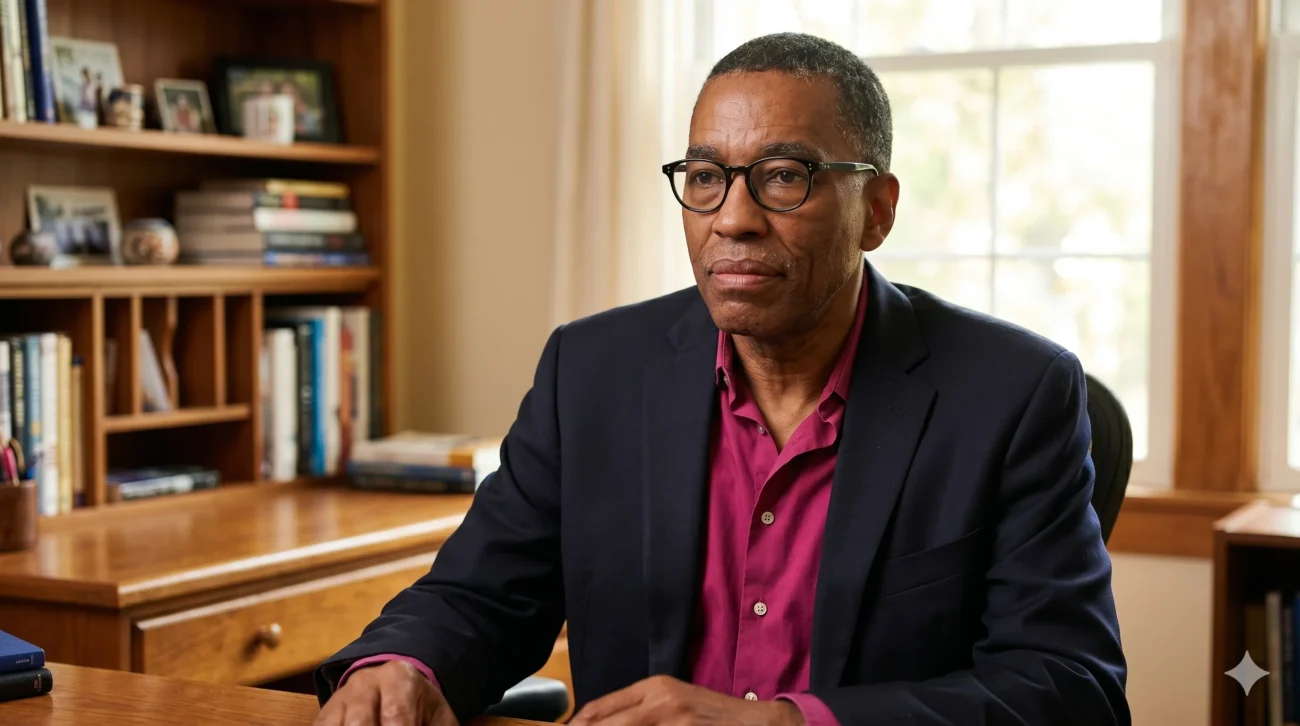
Roderick Jeffrey Watts is the kind of public figure whose name travels in two different ways. Some readers find him through his past connection to Isabel Wilkerson, the Pulitzer Prize-winning journalist and author of The Warmth of Other Suns and Caste. Others know him as Roderick J. Watts, a psychologist and scholar whose work helped shape how researchers think about youth activism, social identity, liberation psychology, and critical consciousness. The better story begins there, with a man whose public record is quieter than his intellectual influence.
Watts is not a celebrity in the familiar sense, and that makes writing about him require extra care. The strongest available record shows a respected academic, professor emeritus, community psychologist, and licensed clinical psychologist whose career centered on justice, identity, and the development of young people in communities facing inequality. CUNY’s Graduate Center lists him as professor emeritus in Psychology and Africana Studies, with research interests that include youth sociopolitical development, youth organizing, civic engagement, men’s development, liberation psychology, social identity, and action research.
Early Life and Family Background
The public record does not offer a detailed account of Roderick Jeffrey Watts’s childhood, parents, siblings, hometown, or early family life. That absence is important because many short online biographies try to make a full life story out of scraps, often adding warm but unsupported language about his upbringing. A careful biography should resist that habit. What can be said with confidence is that Watts built a professional life around education, psychology, Black identity, civic action, and the ways people come to understand power.
His later work suggests a scholar deeply concerned with the social conditions that shape human development. That does not allow anyone to invent childhood experiences for him, but it does help explain the subjects that held his attention for decades. Watts’s scholarship returned again and again to the lives of young people, especially African American youth, and to the question of how people develop agency in difficult social settings. His work also shows a lasting interest in men’s development, cultural identity, and the psychological cost of injustice.
Education and Academic Formation
Watts earned his Ph.D. in psychology from the University of Maryland, according to both his CUNY Graduate Center profile and Pacifica Graduate Institute faculty biography. +1 That training placed him in a field that can sometimes split the inner life from the outside world. Watts’s career moved in the opposite direction, linking personal development to social systems, community settings, race, culture, and public action.
His training has been described in different but related ways. Pacifica identifies him as trained in Critical Social/Personality Psychology, while CUNY describes his background as clinical and community psychology. +1 Taken together, those descriptions point to a psychologist interested not only in individual distress or personality, but in the social world that shapes how people think, feel, organize, and heal.
Career Beginnings and Teaching Path
Watts’s academic career included several major institutions before and during his time at the City University of New York. CUNY states that he came to the Graduate Center from Georgia State University, where he coordinated the joint clinical-community psychology program. His profile also says he served on the faculties of DePaul University and Yale University School of Medicine and was a visiting professor at Stellenbosch University in South Africa.
That path shows a scholar who moved across psychology, social work, public health, and community-based practice. He did not build his reputation only by staying inside one narrow discipline. Instead, his work crossed the boundaries between university research, community programs, youth organizing, and public questions about race and democracy. That movement helps explain why he appears in conversations about psychology, African American studies, civic engagement, and social justice.
Work at CUNY and Hunter College
Watts became most closely associated with CUNY, where his title now appears as professor emeritus in Psychology and Africana Studies at the Graduate Center. CUNY describes his work as combining a strong theoretical frame with a commitment to social justice. His research has examined liberation psychology, manhood development, sociopolitical development theory, and the link between awareness of injustice and willingness to act on that awareness.
Citizens Against Recidivism, where Watts is listed on the advisory board, adds another part of the career picture. The organization identifies him as professor emeritus of psychology at the Graduate Center, CUNY, and says he retired from positions as professor of Social Welfare at Hunter College’s Silberman School of Social Work and professor of Psychology at the Graduate Center. It also describes him as an adjunct faculty member at Pacifica Graduate Institute in Santa Barbara, California.
Psychology With a Public Purpose
Watts’s work sits in a branch of psychology that refuses to treat people as separate from history, economics, racism, institutions, and community life. That orientation is clear in his focus on liberation psychology, a field that asks how oppression shapes mental life and how people can build agency under unequal conditions. In Watts’s work, psychology is not only about adjustment. It is also about consciousness, identity, action, and the struggle to live with dignity.
This approach made him especially relevant to youth development and civic engagement. He studied how young people learn to name injustice, believe change is possible, and take part in action that affects their communities. That may sound simple, but it pushes against a common way of talking about youth, especially young people from poor or racially marginalized neighborhoods. Watts’s work did not ask only how young people can avoid risk; it asked how they can become agents of change.
Critical Consciousness and Youth Development
One of Watts’s best-known scholarly areas is critical consciousness. The idea is often associated with Brazilian educator Paulo Freire, but Watts helped bring it into conversation with youth civic development, community psychology, and social research in the United States. In a 2011 article with Matthew A. Diemer and Adam M. Voight, Watts examined critical consciousness as a key part of political and civic development. That article identified critical reflection, political efficacy, and critical action as central parts of the concept.
In practice, critical consciousness asks how people come to see social problems clearly and whether they believe they can respond to them. A young person might recognize racism, school inequality, housing insecurity, or policing as more than isolated personal trouble. The next step is developing the belief that individual or collective action can matter. For Watts, that movement from awareness to action became a core question in youth development.
Work on African American Men and Manhood Development
Another major part of Watts’s scholarship concerns African American men and manhood development. CUNY lists men’s development, especially African American men’s development, among his research interests. His Google Scholar profile also includes work on masculinity, Black diaspora studies, sociopolitical development, and community action through manhood development. +1
The subject matters because public debates about Black men have often swung between stereotypes, crisis language, and policy slogans. Watts’s work treated manhood development as something shaped by culture, history, social pressure, racial identity, and opportunity. He helped frame development not as a private moral test alone, but as a process tied to community, mentoring, identity, and social action. That made his scholarship useful to educators, youth workers, psychologists, and community organizations.
Books, Articles, and Scholarly Influence
Watts co-edited Human Diversity: Perspectives on People in Context, a 1994 book that CUNY describes as offering practical guidance for diversity-conscious and diversity-sensitive projects and research. His CUNY profile also notes that he contributed to Beyond Resistance! Youth Activism and Community Change, a 2006 book about youth activism and community change. These works place him in a tradition of scholarship that studies people in context rather than treating identity or hardship as isolated traits.
His academic influence can also be seen through citation records. Google Scholar lists Roderick J. Watts as City University of New York emeritus, with thousands of citations across work connected to sociopolitical development, masculinity, and the Black diaspora. Citation counts are not the full measure of a scholar’s value, but they do show that his ideas have continued to circulate among researchers, students, and practitioners. His work remains part of how many scholars discuss critical consciousness, youth participation, racial identity, and liberation-centered psychology.
Community Work Beyond the University
Watts’s career was not limited to publishing and teaching. CUNY says he worked with many nonprofit and community-based organizations, especially in African American youth development. The same profile says he had many years of involvement in men’s group work, which fits the pattern of his writing on masculinity, identity, and community action.
Citizens Against Recidivism gives a fuller picture of that applied work. Its advisory board profile says Watts has consulted with government organizations, schools, foundations, public policy groups, universities, and nonprofits. It also describes his psychological services as centered on holistic health and men’s development, with special attention to men’s well-being after incarceration.
Marriage to Isabel Wilkerson
Many readers first search for Roderick Jeffrey Watts because of Isabel Wilkerson. Public secondary references state that Watts and Wilkerson married in November 1989 at Oxon Hill Manor in Maryland, at a time when Wilkerson was a national correspondent for The New York Times and Watts was an assistant professor at DePaul University. +1 Those references appear to trace back to a wedding notice, though the full original notice was not accessible in the search results reviewed here.
This connection should be handled with care. Wilkerson went on to become one of the most important nonfiction writers in America, winning the Pulitzer Prize for feature writing and later publishing books that reshaped public conversations about migration, caste, and race. Watts’s name now appears on many web pages because of that connection, but the available record does not support turning his biography into an extension of hers. He had his own academic career, his own intellectual commitments, and his own public record long before his name became a search query tied to a famous author.
Private Life, Children, and Public Boundaries
There is no reliable public record reviewed here that confirms whether Roderick Jeffrey Watts has children. There is also no strong public record giving a detailed account of his current family life, residence, or day-to-day personal circumstances. That privacy is not unusual for a scholar whose public career has been rooted in teaching, research, and community practice rather than entertainment or elected office. It also means responsible biography should stop where the evidence stops.
Some websites describe Watts as Wilkerson’s husband in the present tense, while others discuss him as part of her earlier life. A cautious reading is that he is publicly associated with Wilkerson through a reported 1989 marriage, but current marital details should not be overstated without stronger confirmation. Biographical writing can respect reader curiosity without treating private life as open territory. In Watts’s case, the public record is richest on his career and scholarship, not his household.
Public Image and Media Visibility
Watts has maintained a low media profile compared with the public reach of his ideas. He does not appear to have built his reputation through mass media appearances, celebrity interviews, or broad public branding. Instead, his visibility comes through university biographies, scholarly publications, advisory work, and professional networks in psychology, social work, youth development, and community organizing. That kind of public image is quieter, but it can be more durable.
His name also appears across many short web biographies that repeat similar claims, some stronger than others. A reader should be careful with pages that describe his early life, personality, hobbies, exact wealth, or current marriage without sourcing. The strongest sources for Watts are institutional profiles, academic publication records, and organizations that list his professional work. That distinction matters because a careful biography should not borrow certainty from websites that do not show how they know what they claim.
Net Worth and Income Sources
There is no credible public estimate of Roderick Jeffrey Watts’s net worth in the sources reviewed for this article. Some web biographies mention wealth or financial status, but they do not provide clear sourcing, financial records, or reporting that would allow a careful estimate. For that reason, any specific dollar figure would be speculative. A responsible account should say plainly that his net worth is not publicly confirmed.
His likely income sources over the course of his career are easier to describe in general terms. Watts worked as a university professor, scholar, psychologist, consultant, and adjunct faculty member, and he has been associated with nonprofit and advisory work. Those roles can produce stable professional income, but they do not allow an outsider to calculate personal wealth. Unlike entertainers, executives, or public-company founders, academics rarely have transparent financial profiles unless they disclose them.
Awards, Recognition, and Standing
The available sources reviewed here do not show a clear list of major public awards for Roderick Jeffrey Watts. That does not mean his work lacked influence. Academic recognition often appears in citations, course syllabi, edited volumes, advisory roles, and the way later researchers use a scholar’s concepts. In Watts’s case, the recurring evidence points to influence in community psychology, liberation psychology, critical consciousness research, and youth civic development.
His standing is also visible in the institutions that have carried his work. CUNY, Hunter College, Pacifica Graduate Institute, Georgia State University, DePaul University, Yale University School of Medicine, and Stellenbosch University all appear in reliable institutional accounts of his career. +2Pacifica Graduate Institute+2 That range suggests a career that moved across teaching, research, clinical-community psychology, social work, and international academic exchange. It is a profile built less on public fame than on sustained professional contribution.
Where Roderick Jeffrey Watts Is Now
The most current reliable sources identify Watts as professor emeritus at the CUNY Graduate Center and as an adjunct faculty member at Pacifica Graduate Institute. CUNY lists him as emeritus faculty in Psychology and Africana Studies. Pacifica lists Roderick J. Watts among its faculty and identifies his Ph.D. in psychology from the University of Maryland. +1
Citizens Against Recidivism also lists him on its advisory board and says he is currently connected to Pacifica Graduate Institute in Santa Barbara, California. His present public status, then, is best described as retired from full-time CUNY and Hunter College posts while remaining active in teaching, advisory, or professional circles where listed. There is no reliable public evidence reviewed here that supports claims about a major new public project, media career, or personal reinvention.
Why His Work Still Matters
Watts’s work remains relevant because the questions he pursued have not faded. Young people still face schools, neighborhoods, and institutions shaped by inequality. Mental health professionals still debate how to talk about distress without ignoring racism, poverty, incarceration, and exclusion. Community groups still ask how to build confidence, agency, and action among people who have been told to adapt to conditions they did not create.
His scholarship offers a useful answer: human development is not only personal, and healing is not only private. People make sense of themselves through culture, identity, power, memory, and community. For Watts, awareness of injustice could become more than pain or anger. It could become the starting point for action, belonging, and a more honest form of psychological growth.
Frequently Asked Questions
Who is Roderick Jeffrey Watts?
Roderick Jeffrey Watts is best identified in public professional sources as Roderick J. Watts, a psychologist, scholar, and professor emeritus at the CUNY Graduate Center. His work focuses on liberation psychology, youth sociopolitical development, civic engagement, African American men’s development, social identity, and community-based research. He is also publicly known to some readers because of his reported marriage to Isabel Wilkerson in 1989.
What is Roderick Jeffrey Watts known for?
Watts is known for scholarship on critical consciousness, youth activism, liberation psychology, and the link between social awareness and action. His research asks how people, especially young people, come to understand injustice and develop the belief that they can respond to it. He has also worked on African American men’s development, community psychology, and culturally grounded approaches to identity.
Was Roderick Jeffrey Watts married to Isabel Wilkerson?
Public secondary references state that Roderick Jeffrey Watts married Isabel Wilkerson in November 1989 at Oxon Hill Manor in Maryland. Those accounts say Wilkerson was then a national correspondent for The New York Times and Watts was an assistant professor at DePaul University. Current details about their relationship should be treated carefully because many online sources repeat claims without clear sourcing.
Does Roderick Jeffrey Watts have children?
There is no reliable public record reviewed here confirming whether Roderick Jeffrey Watts has children. Because his family life is not broadly documented in institutional or credible public sources, it would be wrong to invent or assume details. The strongest available information concerns his academic career, professional appointments, research interests, and public connection to Isabel Wilkerson.
What is Roderick Jeffrey Watts’s net worth?
Roderick Jeffrey Watts’s net worth is not publicly confirmed by credible sources. Some biography-style websites imply wealth or financial status, but they do not provide evidence strong enough for a responsible estimate. His known professional income sources would likely have included university teaching, psychology work, consulting, writing, and advisory activity.
Where did Roderick Jeffrey Watts teach?
Roderick J. Watts is listed as professor emeritus at the CUNY Graduate Center in Psychology and Africana Studies. CUNY says he previously came from Georgia State University and had served on the faculties of DePaul University and Yale University School of Medicine, as well as holding a visiting professorship at Stellenbosch University. Citizens Against Recidivism also identifies him as retired from Hunter College’s Silberman School of Social Work and CUNY’s Graduate Center.
What is Roderick Jeffrey Watts doing now?
The available public record identifies Watts as professor emeritus at CUNY and as an adjunct faculty member at Pacifica Graduate Institute. He is also listed on the advisory board of Citizens Against Recidivism. There is no strong public evidence reviewed here showing that he maintains a celebrity-style public life, and his current public presence appears tied mainly to scholarship, teaching, and advisory work.
Conclusion
Roderick Jeffrey Watts’s life is not easy to reduce to the usual online biography formula. The available evidence gives only limited access to his early years and private life, but it gives a strong view of his professional commitments. He built a career around psychology that looks outward, toward power, identity, community, justice, and the ways people learn to act in the world.
That is why the most respectful biography of Watts should not treat him only as Isabel Wilkerson’s former or reported husband. That connection explains why many readers search his full name, but it does not define the larger public record. His own work belongs to a serious intellectual tradition that asks how people develop consciousness under unequal conditions.
In a time when mental health is often discussed as an individual burden, Watts’s career offers a wider frame. He has spent decades asking how social reality enters the mind and how people can move from understanding injustice to changing the conditions around them. That remains a valuable question, and it is the reason his name deserves a fuller reading than the search results usually provide.
