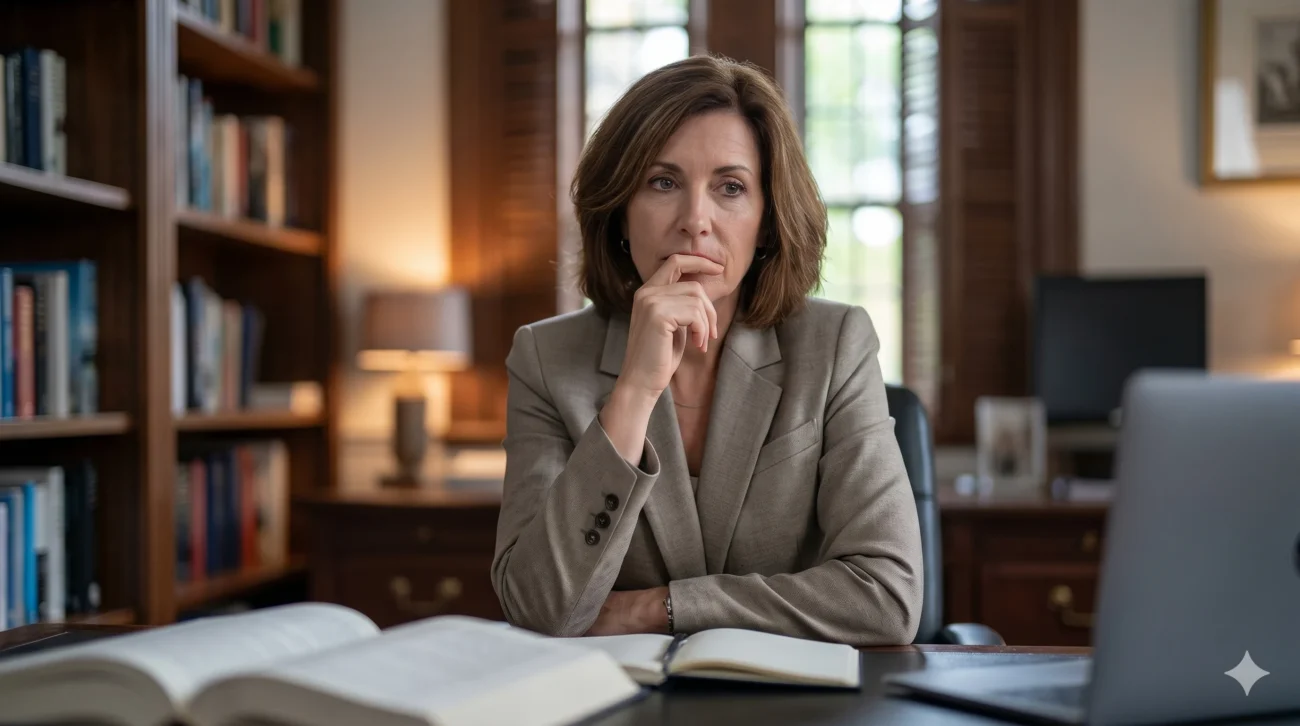
Victoria Elizabeth Bateman is a name that brings readers to two different kinds of search results: some point to a Cambridge economist and feminist author, while others attach the name to the private mother of actors Jason and Justine Bateman. The stronger public record for a biography belongs to Dr Victoria Bateman, the British economist, economic historian, writer, and feminist campaigner who publishes professionally as Victoria Bateman or Victoria N. Bateman. Because “Victoria Elizabeth Bateman” is not the name consistently used on her verified academic and author profiles, the first fact-check is also the most important one: the person most visible in reliable sources is Dr Victoria Bateman, not a separate public figure with a fully verified biography under that exact name.
Bateman is best known for a rare combination of academic authority and public provocation. She is a Fellow in Economics at Gonville and Caius College, Cambridge, and her research has focused on economic history, inequality, women’s rights, and the relationship between freedom and prosperity. She has also become known far outside Cambridge for using nudity in protest and art, especially in campaigns against Brexit and in defence of women’s bodily freedom. That public image can obscure the deeper story: Bateman’s life and work are rooted in class, education, economic insecurity, feminist conviction, and a long effort to make women visible in economics.
Early Life and Family Background
Victoria Bateman was born in Tameside, Greater Manchester, and grew up in and around Oldham, an area with deep ties to Britain’s cotton and industrial past. Her own biography describes her as coming from “a long line of cotton mill workers,” a detail that matters because it places her story inside the working-class history she later studied as an economist. She was not raised in the world of elite universities, even though she would go on to build her career at Cambridge and Oxford. Her route into economics began with lived exposure to instability, not only with textbooks and lectures. +1
Accounts of her early life describe a family shaped by work, debt, and the strain of economic downturns. Her father worked in sheet metal, and her mother worked in payroll; after job losses and business trouble, the family’s financial security weakened. Bateman has linked those experiences to her later interest in economics, especially the way recessions, credit, work, and household pressure shape real lives. The point is not that hardship automatically produces an economist, but that her curiosity about markets had a personal edge from the beginning.
Her upbringing also helps explain why women’s economic choices became central to her writing. Bateman has spoken and written about listening to marginalised women and about understanding how class and gender interact. She grew up seeing how families absorb the shock of economic change, and how women often carry the hidden costs. That background gives her public feminism a sharper frame than the headlines alone suggest.
Education and First Ambitions
Bateman attended state schools in Oldham before studying economics at the University of Cambridge. Public profiles list her later graduate education at the University of Oxford, where she earned an MSc in Economics and Social History and a DPhil in Economics. That academic path gave her a grounding in both technical economics and historical method. It also placed her in two of Britain’s most selective university cultures, a major shift from her Greater Manchester childhood. +1
Her early academic interests leaned toward economic history, especially how markets develop over long periods. That focus set her apart from economists whose work stays mainly in present-day data or formal modelling. Bateman was drawn to the slow movement of institutions, prices, trade, and social rules over centuries. Her later writing about women and wealth grew out of that same habit of looking for the hidden structures behind economic outcomes.
In 2009, Bateman returned to Cambridge as a Fellow in Economics at Gonville and Caius College, according to her author biography. She also became Director of Studies in Economics there, a role connected to teaching and guiding students through the Economics Tripos. That return to Cambridge was more than a career milestone. It put her inside one of the institutions she would later challenge to take gender, history, and social power more seriously. +1
Academic Career at Cambridge
At Cambridge, Bateman built her professional identity as an economic historian. The University of Cambridge’s Centre for Science and Policy describes her research as focused on economic history, social inequalities, modern policy lessons from history, and the effect of women’s rights and empowerment on equality and economic development. Those themes run through her work even when the subject changes from grain prices to feminism. Her career is best understood as a long argument that economies are shaped by social rules as much as by markets alone.
One of her best-known academic works is her paper on the evolution of markets in early modern Europe from 1350 to 1800. The paper studied wheat prices to examine how integrated European markets were over time. Its finding complicated the neat idea that markets simply became more connected in a steady march toward modern capitalism. Bateman’s historical work showed a more uneven process, with advances, contractions, and recoveries across centuries.
Her book Markets and Growth in Early Modern Europe, published by Routledge in 2016, built on that interest in market integration and long-run development. While it did not make her a household name, it established the scholarly foundation for her later public arguments. Bateman’s later books are easier to read as feminist interventions, but they are also economic history projects. They ask how wealth, power, law, and freedom develop together.
The Sex Factor and the Turn Toward Public Feminism
Bateman reached a wider audience with The Sex Factor: How Women Made the West Rich, published in 2019. The book argues that women’s freedoms were central to the West’s economic development, including through work, marriage choices, education, fertility control, wages, savings, and entrepreneurship. Cambridge’s Faculty of Economics describes the book as placing sex and gender at the centre of major economic questions, including why the West became rich and why inequality has risen. That argument made Bateman part of a larger push to bring gender into the core of economic history rather than leave it as a side issue.
The book’s title was bold, but its central idea was practical. Bateman was not claiming that women alone made economies rich. She was arguing that economies waste talent, productivity, and social trust when they restrict women’s choices. In her telling, women’s rights are not only moral gains; they are economic forces that affect growth, households, labour markets, and the state.
That argument landed because it challenged two audiences at once. It told economists that gender was not optional context, and it told feminists that economic history could help explain why freedom matters materially. It also reflected Bateman’s long-standing discomfort with a version of economics that treats households as clean units rather than sites of bargaining, care, dependence, and constraint. The book made clear that her feminism was not separate from her economic training.
Naked Feminism and the Politics of the Body
Bateman’s most controversial public identity is tied to nudity, but she has framed it as an intellectual and political choice rather than a stunt. Her own biography says she has used her naked body in art and protest to challenge stigma around women’s bodies, confront sexism in economics, and oppose Brexit. She has also posed for painted portraits, including works displayed in London and at Girton College, Cambridge. For Bateman, the body is not a distraction from ideas; it is part of the argument about how women are judged, controlled, and silenced.
In 2023, she published Naked Feminism: Breaking the Cult of Female Modesty. The book argues against social and political movements that treat female modesty as virtue while turning women’s bodies into objects of control. Bateman’s position has drawn criticism from people who think nudity weakens serious argument or ignores the risks women face in sexualised public spaces. But here’s the thing: the criticism often proves part of her point, because public reaction to women’s bodies can overwhelm attention to women’s ideas.
Her argument is not simply that women should appear naked if they want to. It is that women should not have their authority measured by how well they obey rules about modesty, sexual respectability, or bodily presentation. In that sense, Naked Feminism is both a personal manifesto and a historical argument. It connects religion, social custom, gender roles, sex work, public shame, and economic dependence into one larger debate about freedom.
Brexit Protests and Public Attention
Bateman became widely recognised in Britain after protesting Brexit with the slogan “Brexit leaves Britain naked.” Following the 2016 referendum, she appeared naked at academic and public events with that message written on her body. In 2019, she delivered a naked anti-Brexit lecture at Cambridge Junction and later appeared in media interviews connected to the campaign. Those events brought her academic arguments into mass public view, though often through sensational headlines rather than careful policy debate.
Her anti-Brexit argument was economic as well as symbolic. Bateman warned that leaving the European Union would reduce openness, damage trade and investment, and leave Britain more exposed. The nakedness was intended as a visual metaphor for vulnerability. Supporters saw it as memorable political art; critics called it attention-seeking or embarrassing.
The reaction revealed the tension that follows Bateman’s public life. She is a trained economist making arguments about trade, markets, and freedom, yet public debate often focuses first on whether her method is respectable. That tension has both helped and hurt her public standing. It has made her impossible to ignore, but it has also allowed some critics to avoid engaging with her economic claims.
Economica and Her Recent Work
Bateman’s later writing expanded from the West-focused argument of The Sex Factor to a wider history of women and economic power. Her 2025 book, Economica: A Global History of Women, Wealth and Power, is presented by Hachette as a global history that places women at the centre of economic life from early human societies to the present. The book’s publisher describes it as an account of how women have always been central to economies, even as laws and norms have limited their freedom. It is the clearest statement yet of the major theme that runs through her career. +1
Recent author profiles also identify Bateman as the resident economic historian on the BBC Radio 4 series Understand: The Economy. Hachette says she also works as a historical consultant to a major television production company. That work shows a newer stage in her public life, one less dependent on protest and more tied to bringing economic history to wider audiences. It also suggests that Bateman has found a role between scholarship, broadcasting, publishing, and historical storytelling.
Gresham College also identifies her as an economic historian and author of Economica, Naked Feminism, and The Sex Factor. Its profile notes her behind-the-scenes work as a historical consultant for period dramas. That detail is small but revealing. Bateman’s interest in history is not confined to academic journals; she is also interested in how the past gets imagined, dramatised, and remembered by the public.
Marriage, Family, and Private Life
Bateman is married to James Bateman, whom she met at Cambridge, according to published biographical accounts. He has been described as working in asset management. Beyond that, Bateman’s private family life is not a large part of the verified public record. Responsible biography should stop there rather than invent domestic details or imply access that does not exist.
There is no reliable public record, from the strongest available sources, confirming children or a detailed account of her married life. That absence should not be treated as mystery or omission. Many academics and writers keep their private families out of public view, even when their public work is outspoken. Bateman’s own public identity is centred on scholarship, feminism, and protest, not on family branding.
The name “Victoria Elizabeth Bateman” also creates confusion with articles claiming to describe the mother of Jason and Justine Bateman. Those pages are weakly sourced and often conflict with better-established entertainment biographies, which identify Jason and Justine’s mother as Victoria Elizabeth, formerly a flight attendant, married to Kent Bateman. That is a different search trail from Dr Victoria Bateman, the British economist. For clarity, this biography focuses on the public economist because that is where verified records, books, university profiles, and professional activity are strongest.
Public Image and Criticism
Bateman’s public image is unusually divided. To supporters, she is a fearless feminist economist who refuses to let women’s bodies be treated as shameful. To critics, her use of nudity can seem like a distraction from serious discussion or a media tactic that overshadows her scholarship. Both readings explain why she has remained visible. She occupies a space between academic authority and public performance that few economists choose.
The criticism has come from more than one direction. Some conservatives reject her views on bodily freedom, sex work, and modesty. Some feminists question whether public nudity is liberating or whether it can reinforce the same sexualised attention women are trying to escape. Bateman’s answer has been consistent: freedom for women must include control over the meaning and use of their own bodies.
What’s surprising is how often the debate around her returns to respectability. Bateman’s work asks whether women must present themselves in approved ways before society will hear them. The response to her protests often shows how strong that expectation remains. Her body becomes the battleground, but the deeper fight is over authority.
Net Worth, Income Sources, and Money
There is no credible, independently verified public estimate of Victoria Bateman’s net worth. Any precise number circulating on low-quality celebrity or biography sites should be treated with caution unless it is tied to transparent records. Her known income sources are professional rather than celebrity-based: university work, books, speaking, broadcasting, consulting, and writing. That gives readers a reasonable picture of her career earnings without pretending to know her private finances.
Her books include academic and trade titles, which differ widely in commercial return. Markets and Growth in Early Modern Europe belongs to a scholarly publishing world, while The Sex Factor, Naked Feminism, and Economica are aimed at wider readerships. She has also written commentary and appeared in media settings, including BBC Radio 4. Those activities build public profile, but they do not allow a responsible writer to assign a firm wealth figure. +1
This matters because biography searches often ask about money, but many public figures outside entertainment do not have transparent financial records. Bateman is not a publicly traded company executive, film star, or elected official with routine asset disclosures. The honest answer is that her net worth is not publicly confirmed. Her professional standing is much easier to verify than her private wealth.
Why Her Work Still Matters
Bateman’s work matters because it forces economics to take women seriously as economic actors. That sounds obvious, but much of economic history has treated women as background figures: wives, mothers, dependents, or moral symbols rather than workers, traders, consumers, savers, innovators, and political agents. Bateman’s writing pushes against that habit. She asks what changes when women’s freedom is treated as a driver of wealth rather than a social footnote.
Her career also speaks to a wider debate about who gets to sound serious in public life. Bateman is serious by the usual measures: elite training, academic appointment, published research, and books from recognised presses. Yet her protest methods have made some audiences question her legitimacy in ways male public intellectuals rarely face for theatrical behaviour. That contradiction is part of why her story keeps attracting attention.
The truth is, Bateman’s biography cannot be separated from argument. Her life story is not only a sequence of schools, books, jobs, and media appearances. It is also a case study in how class, gender, intellectual ambition, and public image collide. She has made a career out of insisting that the economy is never just about money.
Where Victoria Bateman Is Now
As of the most recent public profiles, Victoria Bateman is active as an author, economic historian, broadcaster, and Cambridge-affiliated academic. Cambridge’s Centre for Science and Policy lists her as a Fellow in Economics at Gonville and Caius College. Hachette’s recent author profile connects her to Economica, BBC Radio 4’s Understand: The Economy, and historical consulting work. Her current public life appears focused on bringing the history of women, wealth, and power to a wider audience. +1
Her latest major publishing project, Economica, places her long-running themes into a larger global frame. Rather than only asking how women shaped the West, the book asks how women have shaped economic life across human history. That expansion fits the direction of her career. She has moved from technical work on market integration to broad public arguments about freedom, gender, and power.
Bateman remains a polarising figure, but not a shallow one. The protests may have made her famous, yet the books and academic record explain why she remains worth reading. She is part economist, part historian, part feminist polemicist, and part public performer. That mix makes her hard to categorise, which is exactly why many readers keep searching her name.
Frequently Asked Questions
Is Victoria Elizabeth Bateman the economist’s full name?
The strongest verified public sources identify the economist as Victoria Bateman or Victoria N. Bateman. Some search results use the phrase “Victoria Elizabeth Bateman,” but that exact name is not the standard form used on her official author, university, or publisher profiles. For accurate searches, “Dr Victoria Bateman” or “Victoria N. Bateman” will usually produce better results.
What is Victoria Bateman famous for?
Victoria Bateman is famous for her work as a Cambridge economist, feminist author, and public protester. She has written books including The Sex Factor, Naked Feminism, and Economica. She is also known for using nudity in political protest, especially against Brexit and in defence of women’s bodily freedom.
Where was Victoria Bateman born?
Victoria Bateman was born in Tameside, Greater Manchester, and grew up in the Oldham area. Her background is often described in relation to Britain’s industrial working-class history, especially cotton mill labour. She has connected that upbringing to her interest in economics and marginalised women’s lives. +1
What did Victoria Bateman study?
Bateman studied economics at the University of Cambridge and later earned graduate degrees from the University of Oxford. Public academic profiles list an MA in Economics from Cambridge, an MSc in Economics and Social History from Oxford, and a DPhil in Economics from Oxford. Her work combines economic history, feminist economics, inequality, and development.
Is Victoria Bateman married?
Yes, public biographical accounts identify Victoria Bateman as married to James Bateman, whom she met at Cambridge. He has been described as working in asset management. There is little reliable public detail beyond that, and her private family life is not central to her public biography.
What is Victoria Bateman’s net worth?
Victoria Bateman’s net worth is not publicly confirmed by reliable sources. Her known professional income sources include academic work, books, media appearances, speaking, writing, and historical consulting. Any precise figure online should be treated as an unverified estimate unless it cites transparent financial records.
What is Victoria Bateman doing now?
Victoria Bateman is active as an author, economic historian, broadcaster, and consultant. Recent profiles connect her to Economica: A Global History of Women, Wealth and Power, BBC Radio 4’s Understand: The Economy, and historical consulting work for television. She continues to focus on women, wealth, power, and the way history can reshape economic debate. +1
Conclusion
Victoria Bateman’s biography is easy to flatten into a single image: the naked economist protesting Brexit, or the Cambridge feminist challenging modesty rules. That image is real, but it is not enough. Behind it is a working-class Greater Manchester childhood, elite academic training, serious economic history, and a long-running concern with how women’s freedom changes economies.
The name “Victoria Elizabeth Bateman” makes the story more complicated because the internet often mixes identities and repeats uncertain claims. The verified public record points most clearly to Dr Victoria Bateman, the British economist who publishes under Victoria Bateman and Victoria N. Bateman. For readers, that distinction is the difference between a vague search result and a grounded biography.
Bateman’s lasting importance lies in the pressure she puts on economics to widen its field of vision. She asks readers to see women not as background figures in history, but as central actors in wealth, labour, markets, and power. Whether one agrees with every tactic or not, her career has made one point hard to ignore: an economy that fails to understand women is not fully understanding itself.
