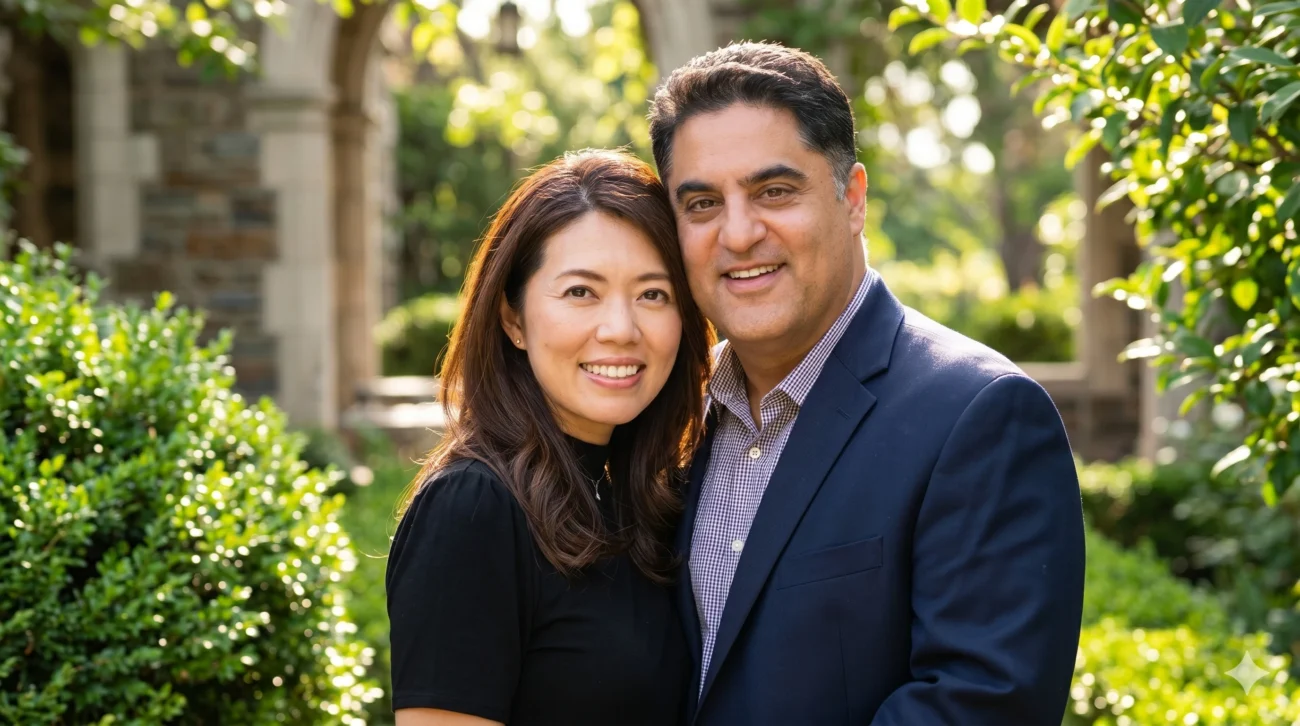
Wendy Lang is searched most often because of someone else’s fame, but the most reliable record of her life points in a quieter direction. She is a Beverly Hills-based Licensed Marriage and Family Therapist, the founder and director of Beverly Hills Child and Family Counseling, and a clinician whose public work centers on children, teens, parents, couples, and families. Her name also appears in celebrity-adjacent searches because she has been widely identified online as the wife of political commentator and The Young Turks founder Cenk Uygur, though the strongest public documentation about Lang is professional rather than personal. That contrast is the key to understanding her story: she lives near a public spotlight without appearing to seek one herself.
Lang’s professional biography describes a therapist trained in family systems, child development, and emotional support for young people whose struggles are not always easy for parents or schools to read. Her clinic says she earned her master’s degree from the University of Southern California in 2004, entered private practice after earlier clinical work, opened her own Beverly Hills practice in 2010, and founded Beverly Hills Child and Family Counseling in 2016. The same biography says she has worked with more than 1,000 families facing learning, social, and emotional issues. Those details make her public identity clearer than many online summaries do: Wendy Lang is not mainly a celebrity spouse in the available record, but a working clinician with a defined practice and specialty.
Early Life and Family Background
Publicly verified information about Wendy Lang’s early life is limited, and that matters. Many short online biographies make claims about her ethnicity, childhood, family, and private background, but they often do so without strong sourcing. Her clinic biography does say she graduated from the clinical psychology department at Fu Jen Catholic University in Taiwan before earning her graduate degree at USC. That educational record points to a cross-cultural path into mental health work, but it does not give enough detail to responsibly reconstruct her childhood.
This is where a careful biography has to slow down. Lang’s public life has not been built through interviews, memoir, reality television, political campaigning, or social media self-disclosure. Unlike the spouses of some public figures, she appears to have kept her private story mostly private. That choice leaves gaps, but those gaps should not be filled with guesses.
What can be said is that her later work suggests a long-standing interest in psychology, family relationships, and children’s emotional development. Training first in clinical psychology and later in marriage and family therapy would have given her a path that connects individual distress with family context. That combination fits the way her practice describes its work today. Her biography is not rich in public anecdotes, but the available facts point to someone who chose a helping profession early and stayed in it.
Education and Clinical Training
Lang’s formal professional path is better documented than her early life. Her clinic biography says she graduated from Fu Jen Catholic University’s clinical psychology department in Taiwan and later received her master’s degree from the University of Southern California in 2004. USC is a major private research university, and a graduate degree in marriage and family therapy prepares clinicians to work with individuals, couples, children, and families through a relational lens. For Lang, that training became the foundation of a career focused heavily on families and young people.
After completing her USC degree, Lang’s clinic biography says she was hired by what it describes as the largest psychological clinic in the Southern California Chinese community. That detail is meaningful because it suggests early work with clients navigating language, culture, family expectations, and emotional distress in a community setting. A UCLA-linked provider profile lists English and Mandarin among her spoken languages, which aligns with the cross-cultural picture presented by her professional materials. Language access can matter deeply in therapy, especially when family members express emotion, conflict, or worry most clearly in different languages.
Marriage and family therapy also differs from a simple advice-giving model. Licensed clinicians are trained to assess patterns, symptoms, risk, communication, attachment, development, and family roles. For children, the work often includes understanding behavior that may be the outward sign of anxiety, depression, ADHD, school pressure, social difficulty, or family conflict. Lang’s later practice would build around exactly those kinds of concerns.
Building a Beverly Hills Practice
Lang’s public career timeline runs through Beverly Hills, where she built the professional identity most associated with her name. Her clinic biography says she opened her private practice in 2010 and founded Beverly Hills Child and Family Counseling in 2016. The practice presents itself as a therapy center for children, teens, adults, couples, and families, with services that include play therapy, art therapy, group therapy, and family counseling. Its listed office is on South Beverly Drive in Beverly Hills, a location that places the practice within one of Los Angeles County’s most visible professional corridors.
Provider records identify Wendy C. Lang as a Marriage and Family Therapist in Beverly Hills with California license number 50288. These records are administrative rather than biographical, but they help confirm the central facts of her professional standing. They also list the Beverly Hills practice location and the same office phone number used across multiple directories. In a field where online profiles can become outdated, the consistency across clinic pages and provider listings helps establish the basic framework of her work.
Beverly Hills Child and Family Counseling appears to be more than a single-name therapist page. The clinic’s public materials describe a team-based setting serving children, adolescents, adults, parents, couples, and families. Lang is identified as founder and director, which means her role likely includes clinical leadership as well as direct client work, though the exact division of her current schedule is not fully public. Her clinic biography says that in recent years she has focused more on short-term consultation, assessment, and group work rather than only long-term therapy cases.
Work With Children, Parents, and Families
Lang’s practice centers on a reality many parents know well: children often communicate distress through behavior before they can explain it in words. Her Psychology Today profile opens with that idea, saying children have many of the same emotions as adults but often do not know how to talk about them or seek help on their own. The profile frames behavior at home or school as a clue that a child may be struggling to cope. That is a common clinical principle, but it is also a practical message to parents who may be unsure whether a problem is discipline, development, stress, or something deeper.
Her listed areas of work include anxiety, depression, ADHD, family conflict, parenting, relationship issues, self-esteem, stress, suicidal ideation, and women’s concerns. A UCLA-linked profile also lists areas such as autism spectrum disorder, OCD, PTSD, panic disorder, social anxiety, self-harm, test anxiety, and multicultural concerns. Directory profiles should not be read as a full clinical evaluation of a provider’s work, but they do show the range of concerns publicly attached to her practice. The recurring pattern is clear: Lang’s work is rooted in emotional health, family communication, and support for young people facing complex pressure.
The family part of family therapy is central. A therapist working with a child may also need to work with parents, siblings, school expectations, routines, and the emotional climate of the home. The goal is not to blame parents or label children, but to understand the repeated patterns that keep a problem alive. That approach is especially relevant for families who feel stuck in cycles of conflict, avoidance, shutdown, or worry.
Gifted and Twice-Exceptional Children
One of the more specific parts of Lang’s public profile is her work with gifted and twice-exceptional children. Twice-exceptional, often shortened to 2e, generally refers to children who are gifted in one or more areas while also having learning, attention, emotional, developmental, or social challenges. These children can be difficult for schools and families to understand because their strengths may hide their struggles, while their struggles may hide their strengths. Lang’s Psychology Today profile lists gifted and twice-exceptional children, teens, adults, and parents of gifted or twice-exceptional children among her top specialties.
That specialty gives Lang’s career a clearer shape. Gifted children are sometimes imagined as easy success stories, but many families find the opposite: emotional intensity, perfectionism, boredom, social mismatch, executive-function problems, anxiety, or conflict over schoolwork. A child may read years ahead of grade level but melt down over writing assignments, or show advanced reasoning while still needing age-appropriate emotional support. Therapy for these families often requires seeing ability and difficulty at the same time.
Lang is also listed as connected with SENG Model Parent Groups, which are designed for parents of gifted children. Her SENG page describes her as specializing in gifted and twice-exceptional children, teens, and young adults, and says she has more than 20 years of experience with children and families dealing with ADHD, social issues, and emotional issues. Parent groups can be valuable because families often need more than child sessions; they need language, strategies, and support from adults facing similar questions. That part of Lang’s work places her within a specialized corner of child and family mental health.
Marriage, Children, and Public Curiosity
Wendy Lang’s name appears in many searches because of her reported marriage to Cenk Uygur. Uygur is a Turkish American political commentator, lawyer, and media entrepreneur best known as a co-founder and host of The Young Turks, a progressive online news and commentary network. Many entertainment-style biography pages identify Lang as his wife and name children said to be part of their family. But here’s the thing: much of that personal information circulates through low-authority pages that repeat one another without clear primary sourcing.
That does not mean every personal claim is false. It means a responsible biography should not present private details with more certainty than the public record supports. Lang herself does not appear to have made her family life a public project, and her professional pages do not trade on political celebrity. The available record suggests a person who keeps her home life separate from her clinical identity.
This restraint is especially important because children are often named in online celebrity-family content without much attention to privacy. Where family details are not confirmed by strong public sources, they should be treated as unverified or left out. Lang’s connection to a public figure explains part of the search interest in her name, but it does not define the full measure of her life. Her career stands on its own in the records that can be checked.
Money, Income, and Net Worth
There is no credible public financial disclosure that establishes Wendy Lang’s personal net worth. Some online biography pages either avoid the question or offer unsourced estimates, but those figures should not be treated as reliable. Private therapists generally earn income through clinical fees, consultation, group programs, and practice ownership, yet those revenue streams vary widely by caseload, expenses, insurance participation, staffing, rent, and business structure. Without tax records, verified business financials, or a direct statement, any exact net worth claim would be guesswork.
What can be said is more modest and more accurate. Lang is the founder and director of a Beverly Hills counseling practice, and therapist directories list her as offering services in a high-cost professional market. One directory lists a $300 session fee, though directory prices can change and may not reflect every type of service or current rate. For readers seeking care, current fees should be verified directly with the practice rather than taken from a third-party listing.
The wider family’s finances should also not be folded into Lang’s biography without care. Cenk Uygur’s media career is public, but that does not establish Lang’s personal assets or income. A fair account separates her professional earning capacity from speculative celebrity net worth culture. The honest answer is that her income sources appear tied to therapy, clinical leadership, consultation, and practice ownership, while her exact net worth is not publicly confirmed.
Public Image and Privacy
Lang’s public image is unusual because it has been built more by search behavior than by self-promotion. Her clinic and therapist profiles present a clinician with a calm, practical focus on families and children. Celebrity-adjacent websites, by contrast, often frame her as the quiet spouse of a loud public man. That contrast may be tempting for headline writers, but it can flatten the person into a role.
The available record suggests Lang has chosen professional visibility and personal privacy. She maintains enough public presence for clients to understand her credentials, location, specialties, and approach. She does not appear to seek a wider media role, political platform, or influencer-style identity. That distinction is worth preserving because it reflects a real boundary between public work and private life.
For a therapist, privacy is not only personal preference; it can also be part of professional culture. Clients come to therapy with sensitive material, and many clinicians keep their own lives quiet so the work remains centered on the client. Lang’s low public profile fits that norm. It also explains why the most useful biography of her is necessarily careful, grounded, and limited by verifiable facts.
Where Wendy Lang Is Now
As of the latest public information, Wendy Lang remains associated with Beverly Hills Child and Family Counseling in Beverly Hills, California. The clinic continues to list her as founder and director, and its website describes services for children, teens, adults, couples, and families. Public directory pages also continue to connect her with work involving gifted and twice-exceptional children, ADHD, anxiety, depression, family conflict, and parenting. These sources can change, so anyone seeking an appointment should confirm current availability directly with the clinic.
Her current work appears to include a mix of consultation, assessment, parent support, and group-oriented services, based on her clinic biography and related listings. The clinic biography says she has become more focused on short-term individual consultation, family and child assessment, and issues involving gifted children and ADHD. That suggests a clinician who has moved from only direct long-term therapy into a broader leadership and specialist role. It also reflects a common path for experienced therapists who begin guiding families through assessment and care decisions.
Lang’s story remains partly private by design. There are no widely documented public controversies, major awards, books, or media campaigns attached to her name. Instead, her public contribution is quieter and more local: a clinical practice built around children and families in a city better known for entertainment and wealth than for the private strain inside households. That may be why her biography feels different from the usual internet profile.
Frequently Asked Questions
Who is Wendy Lang?
Wendy Lang, also listed as Wendy C. Lang, is a Licensed Marriage and Family Therapist based in Beverly Hills, California. She is the founder and director of Beverly Hills Child and Family Counseling, a clinic that works with children, teens, adults, couples, parents, and families. Her public profile is strongest in professional directories and clinic materials rather than mainstream media coverage.
What is Wendy Lang known for?
Wendy Lang is best known professionally for her work in child and family therapy. Her public profiles emphasize gifted and twice-exceptional children, ADHD, emotional issues, social difficulties, parent support, anxiety, depression, and family conflict. She is also widely searched because of her reported connection to Cenk Uygur, though her verified public record is mainly clinical.
Where did Wendy Lang study?
Her clinic biography says she graduated from the clinical psychology department at Fu Jen Catholic University in Taiwan and earned her master’s degree from the University of Southern California in 2004. That education supports the cross-cultural and family-systems background reflected in her professional work. Public materials also list English and Mandarin among her languages.
Is Wendy Lang married to Cenk Uygur?
Many online profiles identify Wendy Lang as the wife of Cenk Uygur, the political commentator and co-founder of The Young Turks. The strongest publicly available information about Lang, however, comes from her professional pages rather than personal interviews or family statements. Because she keeps a low public profile, personal details about her marriage and children should be treated carefully unless supported by strong sources.
What is Wendy Lang’s net worth?
Wendy Lang’s personal net worth is not publicly confirmed by reliable financial records. Some websites may publish estimates, but those figures are not well sourced and should not be treated as fact. Her known income sources appear tied to her work as a therapist, founder, director, consultant, and clinical professional in Beverly Hills.
What is Beverly Hills Child and Family Counseling?
Beverly Hills Child and Family Counseling is the practice associated with Wendy Lang as founder and director. Its public materials describe therapy and counseling services for children, adolescents, adults, couples, and families. The practice lists services such as play therapy, art therapy, group therapy, and family counseling, with an office on South Beverly Drive in Beverly Hills.
Does Wendy Lang still practice therapy?
Public sources continue to associate Wendy Lang with Beverly Hills Child and Family Counseling. Her clinic biography says her work has shifted in recent years toward short-term consultation, family and child assessment, gifted children’s emotional issues, ADHD-related concerns, and group work. Prospective clients should contact the practice directly for current availability, fees, and appointment options.
Conclusion
Wendy Lang’s biography is not the story of someone chasing fame. It is the story of a clinician whose name became more searchable because of a public association, while her own work remained focused on private rooms, family conversations, and children trying to make sense of feelings they cannot always explain. That difference matters because it protects the shape of her real public identity.
The verified record shows a USC-trained Licensed Marriage and Family Therapist, a Beverly Hills practice founder, and a specialist whose work includes gifted and twice-exceptional children, ADHD, emotional concerns, parenting, and family conflict. It does not support the kind of overconfident personal storytelling that often surrounds people linked to public figures. A good profile has to honor both sides: the reader’s curiosity and the subject’s privacy.
Lang’s place now appears steady, professional, and deliberately low-profile. She remains publicly tied to a family counseling practice and to a field where the most meaningful work often happens far from cameras. For readers trying to understand Wendy Lang, that may be the most revealing fact of all: her public story is less about fame than about the quieter labor of helping families find language, structure, and relief.
